

Transform Environmental Physics Into Human-Centric Insights With Precision Physiological Modeling
Predict localized thermal sensation and comfort using industry-standard thermoregulatory solvers to optimize HVAC efficiency, safety, and performance.
Design Thermal Systems Around Real Human Experience
The Human Thermal Extension is the industry-standard solution for integrating high-fidelity physiological responses into complex 3D thermal environments. While traditional CAE tools treat occupants as static heat loads, this extension employs a sophisticated thermoregulation solver that accounts for metabolic rate, vasomotion, respiration and perspiration. By simulating the active feedback loops of the human body, engineers can move beyond bulk temperature approximations to achieve a greater understanding of how environmental variables, such as solar loading, airflow velocity, and humidity, impact localized thermal comfort and safety.
This extension solves the critical engineering challenge of balancing energy efficiency with occupant well-being. In industries ranging from automotive HVAC design to aerospace and defense, the ability to predict shivering, sweating, and blood flow distribution allows for the optimization of climate control systems without the need for exhaustive human subject and/or physical manikin testing. The result is a high-speed simulation that couples 3D environmental physics with active thermoregulatory logic, allowing engineers to predict not just surface temperatures, but the precise biological responses and sensory perceptions of a living occupant.

Optimize Occupant Comfort
Design HVAC systems and heated/cooled seating that target specific body parts for maximum comfort with minimum energy.

Predict Human Stress
Predict core temperature rise and the onset of heat exhaustion, reducing the need for risky human-subject testing.

Reduce Physical Prototyping
Identifying thermal discomfort before a single physical cabin or garment is manufactured.

Model Active Biological Responses
Simulate real-time physiological changes, providing a realistic feedback loop between the person and the space.
Advanced Capabilities for
Real-World Applications
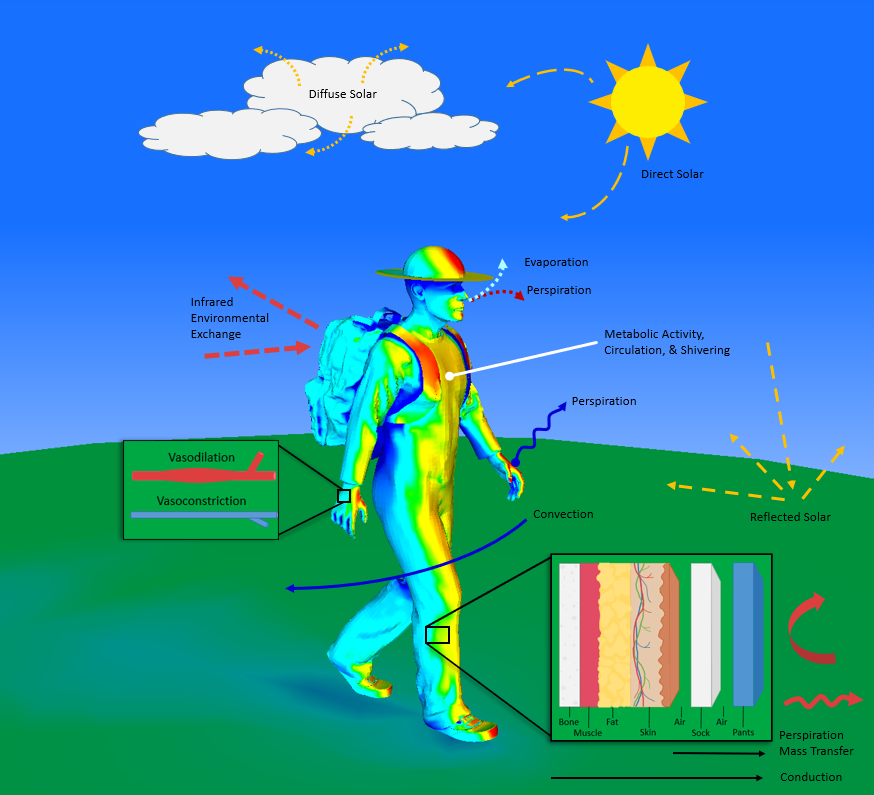
Physiological Feedback Control
The core of the extension is a multi-node physiological model that simulates the human body’s active thermoregulatory system. This solver calculates internal heat production and distribution via the circulatory system, accounting for the non-linear response of the hypothalamus to peripheral and core temperature shifts. This allows for the prediction of transient states, such as a passenger entering a hot vehicle soak, with unparalleled accuracy.
Vaso-dynamic Modeling
Simulates vasoconstriction and vasodilation to accurately predict extremity temperatures.
Active Sudomotor Response
Calculates sweat rate and evaporative cooling based on local skin humidity.
Metabolic Scaling
Adjusts heat generation based on activity levels, from sedentary office work to high-intensity physical exertion.
Multi-Layer Tissue Stratification
Defines specific thermal properties for bone, muscle, fat, and skin layers across 20+ body segments.
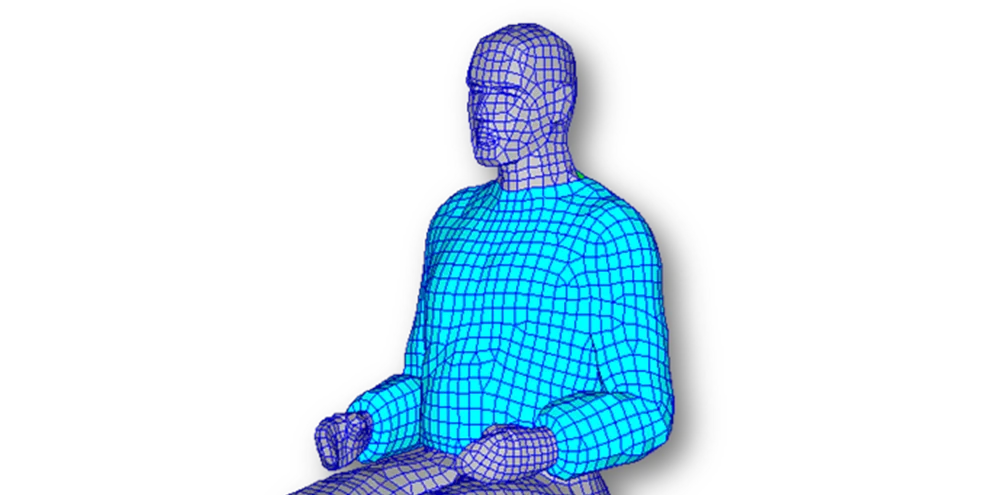
Clothing & Gear Integration
As manufacturers move toward “micro-climate” strategies, heated and cooled seats have become essential for providing direct thermal relief with minimal energy expenditure. The challenge is modeling the conductive heat transfer and moisture accumulation at the high-pressure interface between the human and the seat material. HTE manages this by simulating contact resistance and the sudomotor (sweat) To accurately model the human-environment interface, the extension provides a comprehensive framework for defining clothing ensembles and personal protective equipment (PPE). It accounts for the thermal resistance and evaporative resistance of individual fabric layers. This capability is essential for simulating how different apparel configurations mitigate or exacerbate thermal stress in extreme conditions., allowing designers to optimize heating element placement and ventilation fan speeds for maximum perceived comfort.
Layer-Specific Vapor Permeability
Models the vapor permeability of fabrics and its impact on convective heat loss.
Moisture Management
Tracks the accumulation of liquid and transport of vapor through clothing layers.
Contact Resistance Modeling
Accounts for the conductive heat transfer between the body and surfaces like vehicle or cockpit seats.
Dynamic Adjustment
Automatically modifies insulation values based on posture and “pumping” effects caused by body movement.
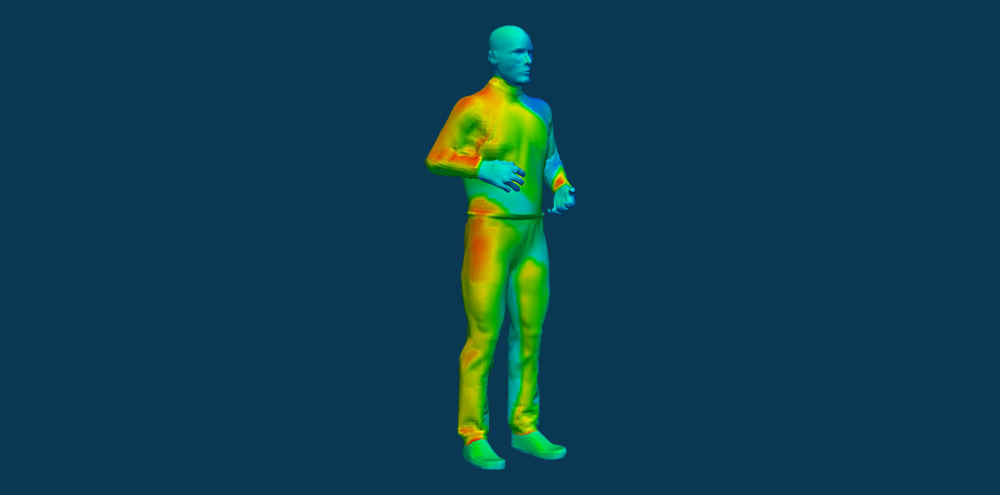
High-Resolution Thermal Perception with the Berkeley Comfort Model
Predicting skin temperature is only one component of the design; the HTE integrates the Berkeley Comfort Model (BCM) to translate physics into human perception. BCM is the gold standard for predicting thermal sensation and comfort in non-uniform, transient environments. This allows engineers to identify if a cold draft on the neck causes discomfort even when the global environment is considered “warm”.
Local vs. Global Sensation
Identifies localized discomfort points that global averages (like PMV or DTS) often overlook.
Sensation vs. Comfort
Distinguishes between the physical feeling (hot/cold) and the psychological reaction (pleasant/unpleasant).
Transient Sensitivity
Captures rapid thermal shifts, such as an EV HVAC pull-down or a sudden burst of physical exertion.
9-Point Scale metrics
Provides actionable data ranging from “Very Hot” to “Very Cold” and “Very Comfortable” to “Very Uncomfortable” for every body segment.
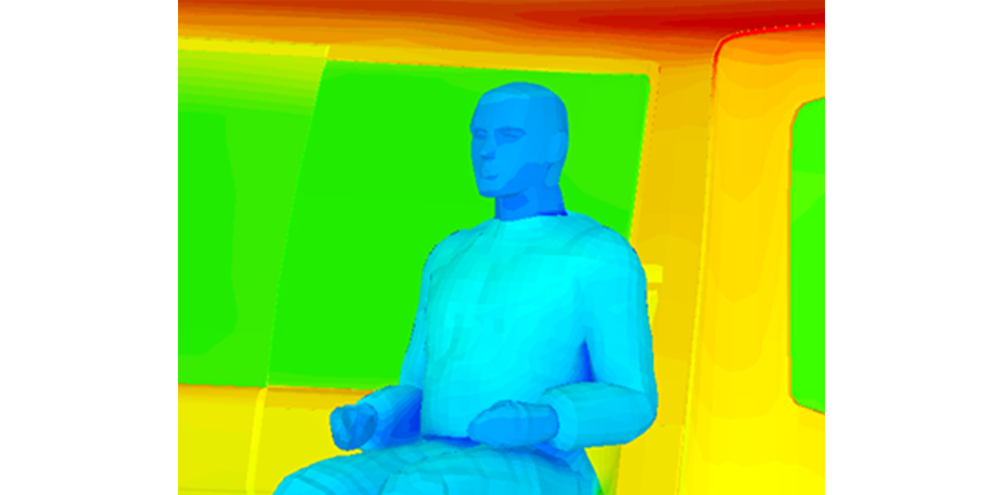
Full-System Co-Simulation
Human thermal response does not occur in a vacuum, which is why the HTE is designed as a dynamic component of a full-system digital twin. Through the CoTherm orchestrator, the human model can communicate in real-time with 3D CFD or 1D system tools. This ensures that the HVAC control logic and the human physiological response are perfectly synced.
Automated Workflow
Uses CoTherm to manage complex interactions between the human, environment, and thermal systems.
Airflow Integration
Works with RapidFlow to capture convection effects without the overhead of full CFD for every iteration.
Radiation & Conduction
Leverages TAITherm for high-fidelity radiation modeling in cabins and buildings.
Signature Analysis
Pairs with MuSES to predict the infrared (IR) signature of a person based on metabolic heat and clothing.

Electronics Thermal Analysis
For high-performance computing, automotive auxiliary electronics, and telecommunications, CoTherm manages the coupling between thermal, fluid, and power-draw models.
Dynamic Workload Analysis
Coordinates realistic duty cycles, such as how a CPU/GPU “burst” of activity creates transient heat that the cooling system must mitigate.
Material Stack-Up Study
CoTherm’s automation of design sweeps pairs with TAITherm’s powerful multilayer modeling and thermal linking capabilities to easily study the thermal impact of different chip layout, cooling device, or TIM (Thermal Interface Material) choices across a design space.
Environmental Influence Considerations
Automated workflows enable comprehensive studies of how external ambient changes affect the internal operating temperature of electronics enclosures.
Engineered for
Real-World Applications
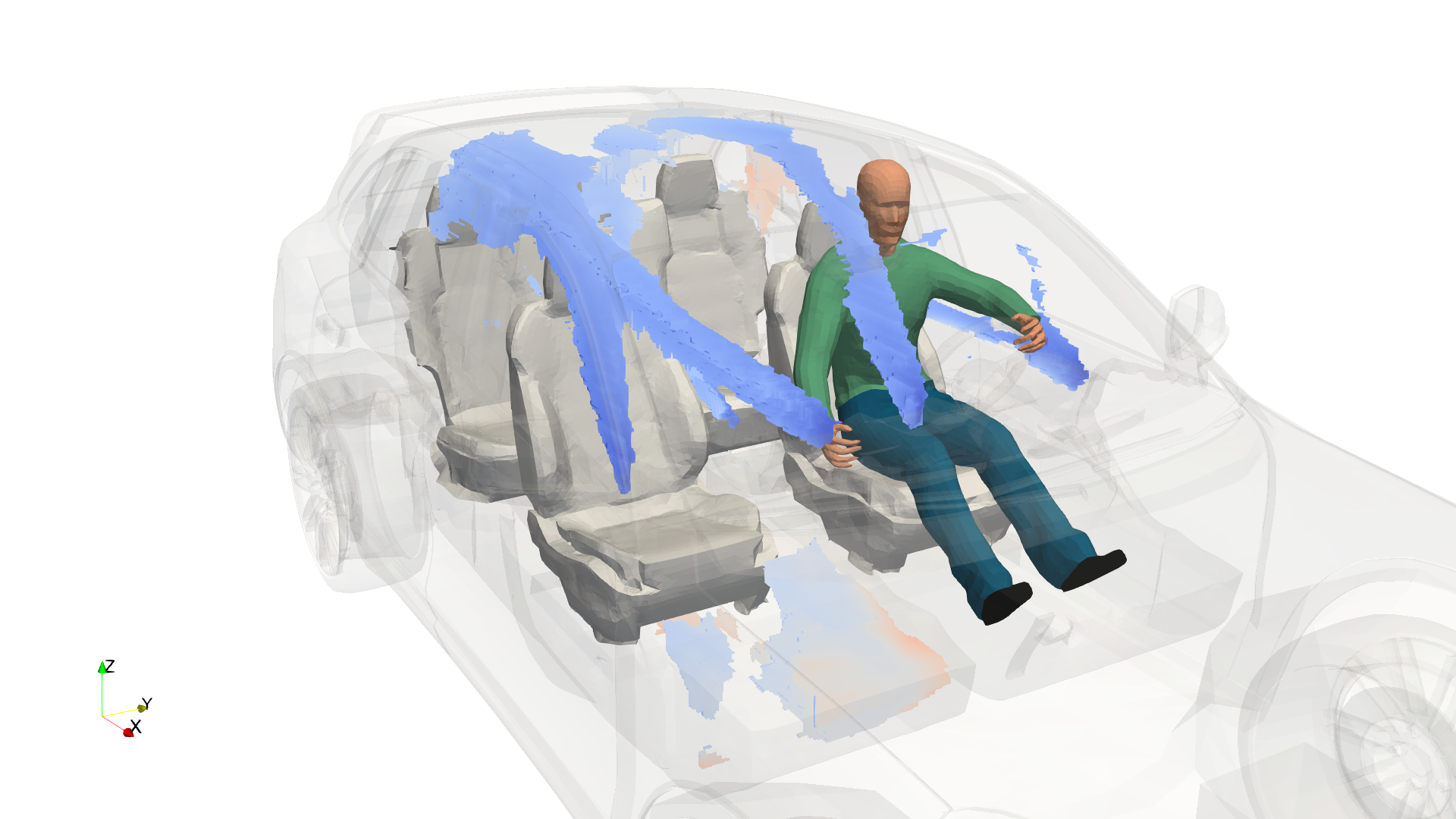
Cabin Climate Control & Occupant Comfort
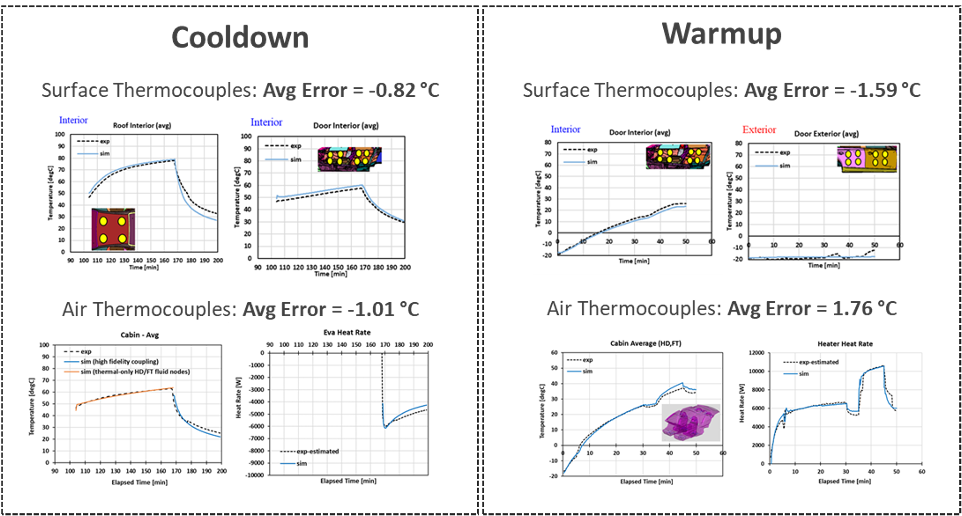
Designing efficient HVAC systems requires understanding localized thermal comfort under transient cool-down or warm-up conditions with pre-conditioning from vehicle-only soak conditions. RapidFlow is effective for adding 3D airflow effects to both modeling scenarios. RapidFlow seamlessly integrates with TAITherm’s Human Thermal Extension to simulate 3D airflow patterns around passengers, calculating precise air temperature and convective coefficients. This allows engineers to optimize vent placement and HVAC power usage while maintaining neutral occupant sensation.
Localized Thermal Comfort
Predicts local human sensation, comfort, and thermoregulation in asymmetric airflows.
HVAC Efficiency Optimization
Fast simulations, comprehensive heat transfer and energy reporting, and system model coupling make it easy to evaluate energy use and system effects during transient cycles.
Soak and Cool-Down Analysis
Simulates the rapid temperature changes and time-to-comfort in a cabin after various pre-conditioning scenarios in real-world or environmental chamber conditions.
Defrost Performance
Analyzes detailed airflow across windows and couples with TAITherm phase change modeling to ensure safety and visibility performance standards are met.
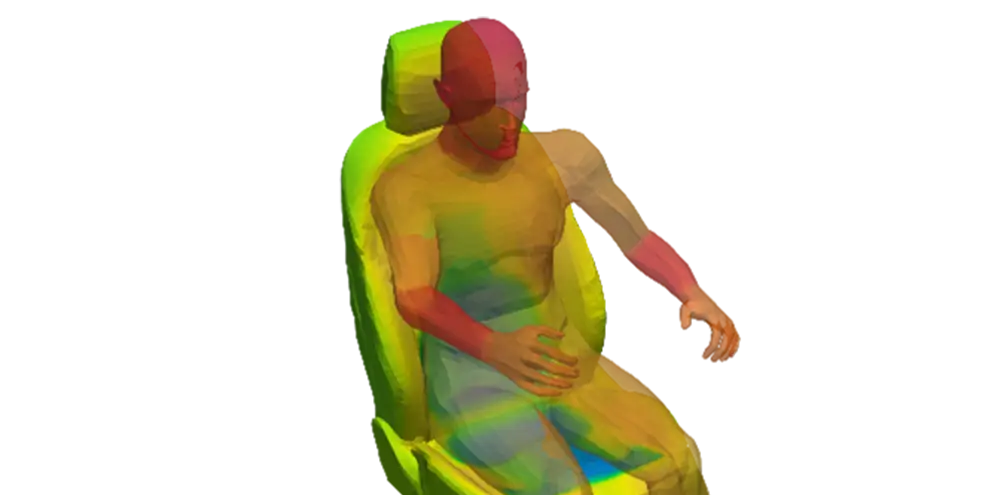
Electric Heating Elements – Heated and Cooled Seats
As manufacturers move toward “micro-climate” strategies, heated and cooled seats have become essential for providing direct thermal relief with minimal energy expenditure. The challenge is modeling the conductive heat transfer and moisture accumulation at the high-pressure interface between the human and the seat material. HTE manages this by simulating contact resistance and the sudomotor (sweat) response, allowing designers to optimize heating element placement and ventilation fan speeds for maximum perceived comfort.
Conductive Interface Modeling
Accurately calculates heat flux between the body segments and various seat trim or internal structural and foam layers.
Localized Sensation Tracking
Quantifies the “alliesthesia” effect where localized warming/cooling provides a high comfort ROI for the occupant.
Active Sweat Management
Predicts liquid accumulation and evaporation at the seat-back interface to prevent “clamminess”.
Material Selection ROI
Evaluates the thermal performance of different upholstery materials (leather vs. fabric) on passenger sensation.
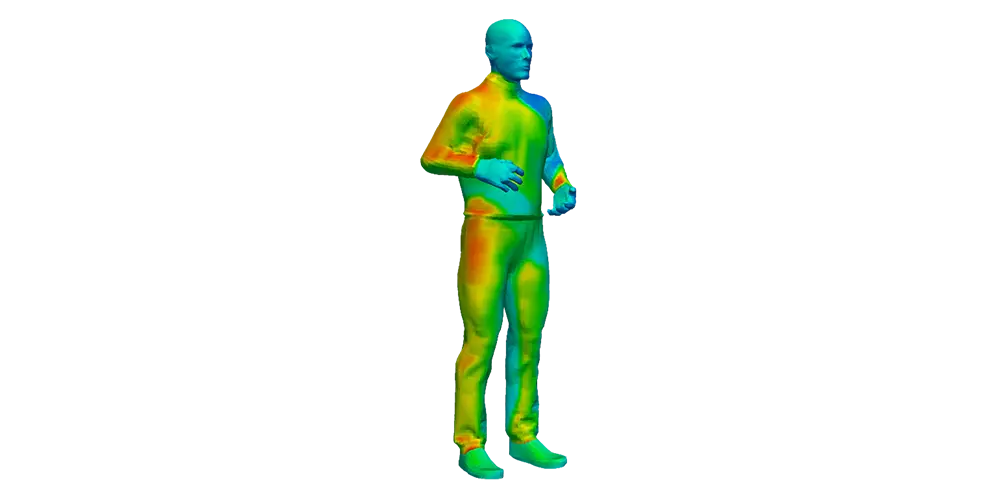
Performance Textiles & PPE
For first responders, military personnel, and athletes, clothing is more than apparel, it is a critical thermal barrier that can cause heat strain or failure if not properly engineered. The challenge is to balance insulation against vapor permeability in high-stress environments where sweat must be wicked away to prevent core temperature spikes. Using the Clothing Manager, HTE models multi-layer ensembles, allowing engineers to test how different textiles mitigate the risk of heat exhaustion during bursts of physical exertion.
Vapor & Thermal Resistance
Models values to predict the breathability and insulation of complex PPE kits.
Heat Strain Prediction
Forecasts core temperature rise and cognitive decline during long-duration missions or high-intensity work.
Ergonomic “Pumping” Effects
Accounts for how body movement changes clothing insulation and airflow through fabric layers.
Liability Mitigation
Provides physics-based validation that protective gear maintains safe physiological limits in extreme environments.

Electronic Wearables & Skin-Contact Safety
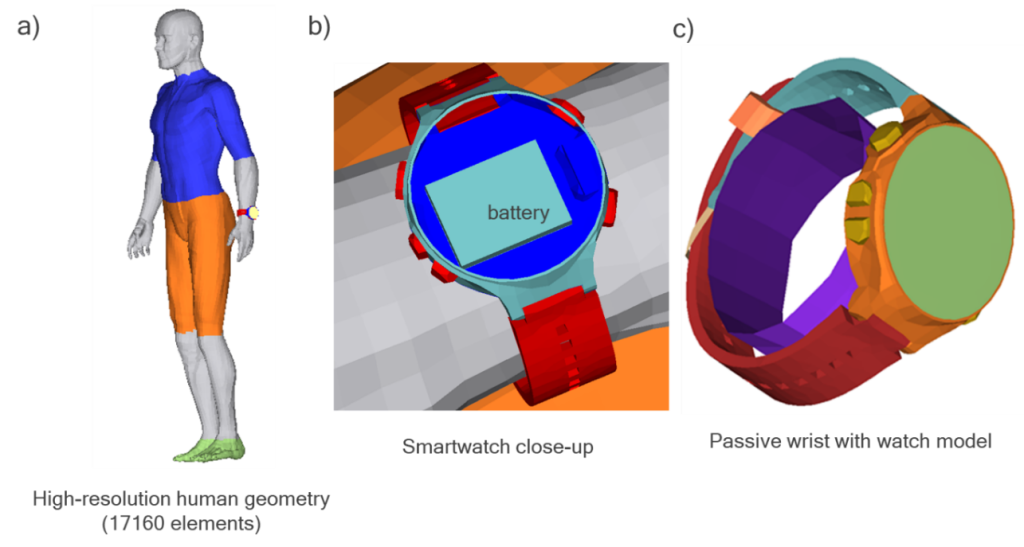
Wearable devices, from smartwatches to medical sensors, present a unique liability risk because they generate heat directly against the skin. The engineering challenge is managing the device’s thermal discharge to ensure it never exceeds pain or burn thresholds while remaining comfortable for long-term wear. HTE simulates the active blood flow (vasodilation) in the skin layers, which acts as a “heat sink” for the device, providing a high-fidelity look at the real-world temperature at the skin-device interface.
Skin-Contact Temperature Safety
Predicts how glass properties and sun position affect skin temperature and thermal sensation in real-time.
Vaso-dynamic Response
Uses the Berkeley Comfort Model to identify if high-velocity air at specific body segments, like the neck, causes discomfort.
Biological “Heat Sink” Modeling
Accounts for the multi-layer tissue properties (fat, muscle, bone) that influence heat conduction away from the device.
Optimized R&D Cycles
Replaces or augments risky human subject testing with digital trials to verify thermal safety early in the design.
Rigorously Validated for
Real-World Accuracy
The Human Thermal Extension provides the specialized depth that generic thermal solvers lack, transforming raw environmental data into actionable human-centric insights. By moving beyond average temperature assumptions, organizations can front-load the design process and ensure that the first physical prototype is production-ready.
Drastic Reduction in Physical Prototyping
Identify comfort and safety risks digitally to eliminate multiple rounds of hardware testing, saving hundreds of thousands of dollars.

Optimized Efficiency
Right-size equipment based on realistic human sensation, translating directly to increased EV range and reduced battery costs.
Mitigating Liability
Provide a documented, physics-based audit trail of safety to prevent recalls related to heat stress or skin-contact burns.

Competitive Differentiation
Deliver superior human-centric performance such as a cabin that remains comfortable in desert conditions to drive brand loyalty and premium pricing.
Tools for Thermal Modeling
ThermoAnalytics product extensions are designed to integrate seamlessly with core solvers to provide high-fidelity, specialized analysis without leaving the primary simulation environment.
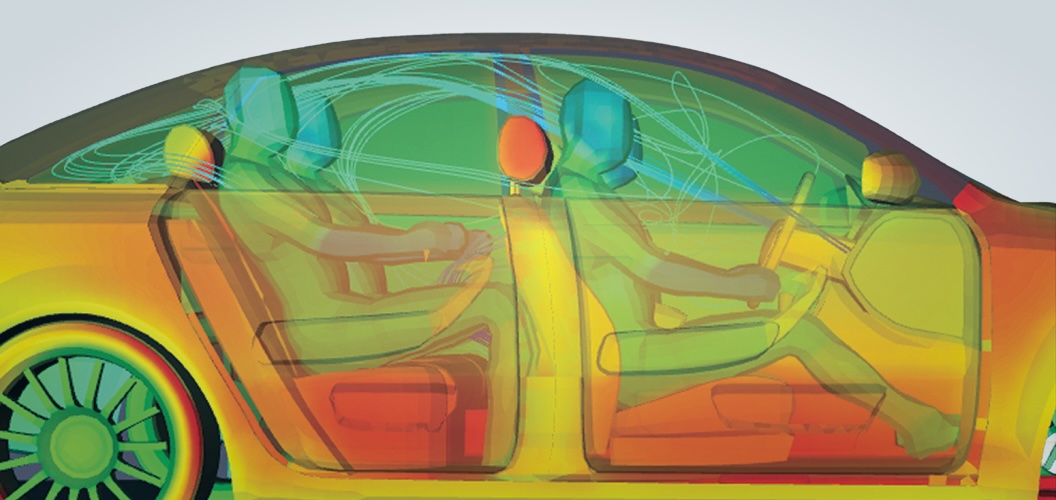

Simulate real-world thermal behavior across complete systems with validated, multiphysics accuracy.


Predict EO/IR signatures in real environments for mission-critical visibility and survivability analysis.