

High-Fidelity Battery Thermal Management Without the CFD Overhead
Utilize specialized thermal-electric solvers to validate cooling strategies, prevent thermal propagation, and quantify capacity fade over thousands of operational cycles.
Design Safer, More Efficient Battery Thermal Systems
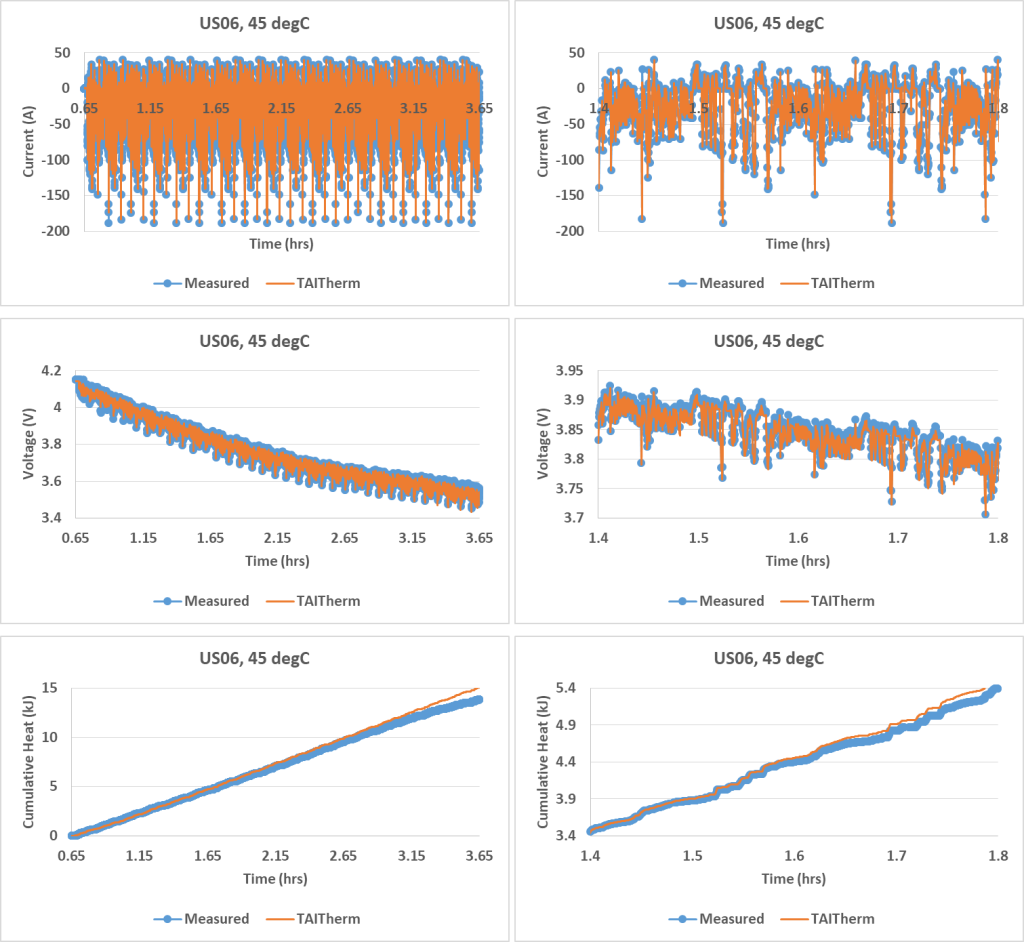
The Battery Thermal Extension is a high-fidelity thermal-electric solver designed for engineers who require greater precision than 1D lumped-parameter models but need faster results than traditional CFD. By utilizing realistic electrical and thermal boundary conditions, the extension enables a comprehensive evaluation of battery performance. It allows engineering teams to move beyond component-level validation, identifying thermal risks and performance bottlenecks that emerge when the battery is integrated into dynamic, fielded vehicle designs.
The Battery Thermal Extension accurately predicts localized heat generation and temperature distributions across diverse operational cycles. While general-purpose solvers often rely on simplified heat source assumptions, this extension utilizes coupled electro-thermal modeling to simulate the heat produced during active operation. High-fidelity simulation ensures that thermal management systems are sized correctly for safety, efficiency, and durability without the need for excessive physical prototyping.
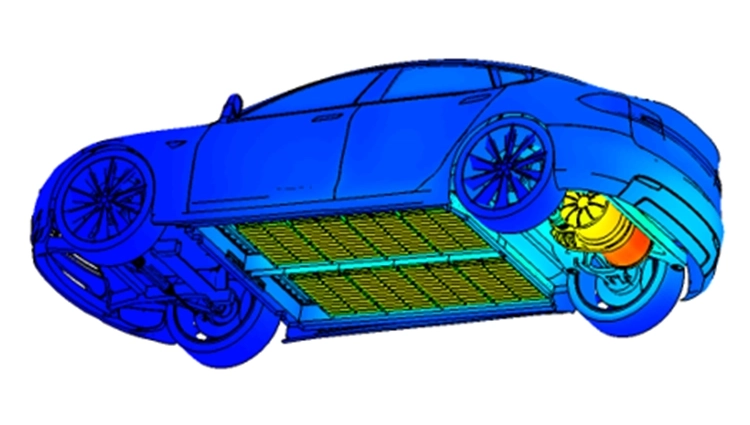

Predict Thermal Performance
Coupled electro-thermal solvers calculate exact heat generation during charge and discharge cycles to maintain optimal operating windows.

Extend Battery Longevity
High-fidelity degradation modeling simulates capacity fade and resistance growth to accurately forecast long-term service life and warranty risks.

Prevent Thermal Runaway
Advanced propagation analysis identifies cell-to-cell heat transfer during failure scenarios to validate the effectiveness of thermal barriers.

Maximize Vehicle Range
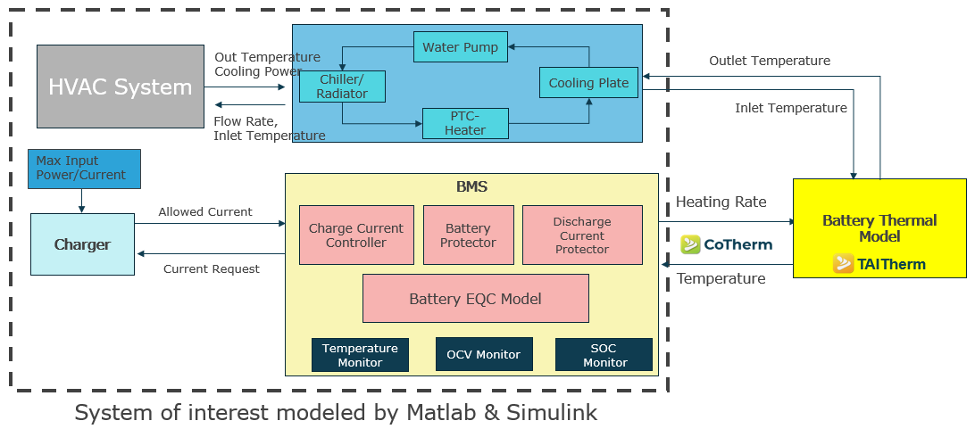
Direct integration with HVAC control logic optimizes cooling strategies to reduce parasitic energy loss and increase overall drive mileage.
Advanced Capabilities for
Complex Thermal Systems
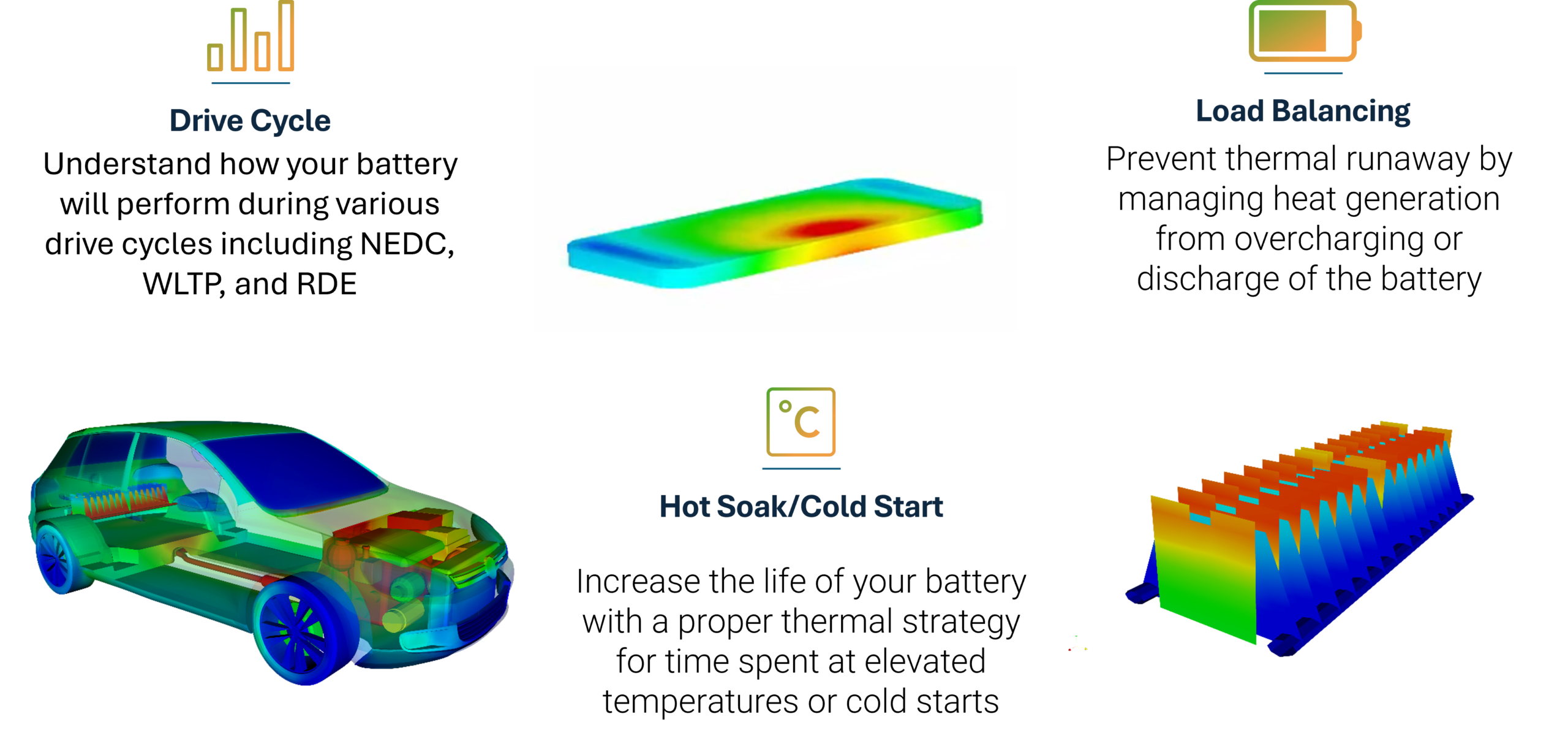
Multi-Fidelity Electrical Modeling
The software incorporates several thermal-electric models, developed in collaboration with the National Renewable Energy Laboratory (NREL), to provide varied levels of analytical depth. These models allow engineers to balance calibration speed with simulation accuracy.
NTG Equivalent Circuit
Utilizes a streamlined two-parameter input system for rapid model building and easy calibration.
NREL Equivalent Circuit
Incorporates additional R-C pairs to capture time constants for high-accuracy analysis of transient drive cycles.
Localized Heat Mapping
Directly translates electrical losses into 3D thermal gradients across the battery geometry.
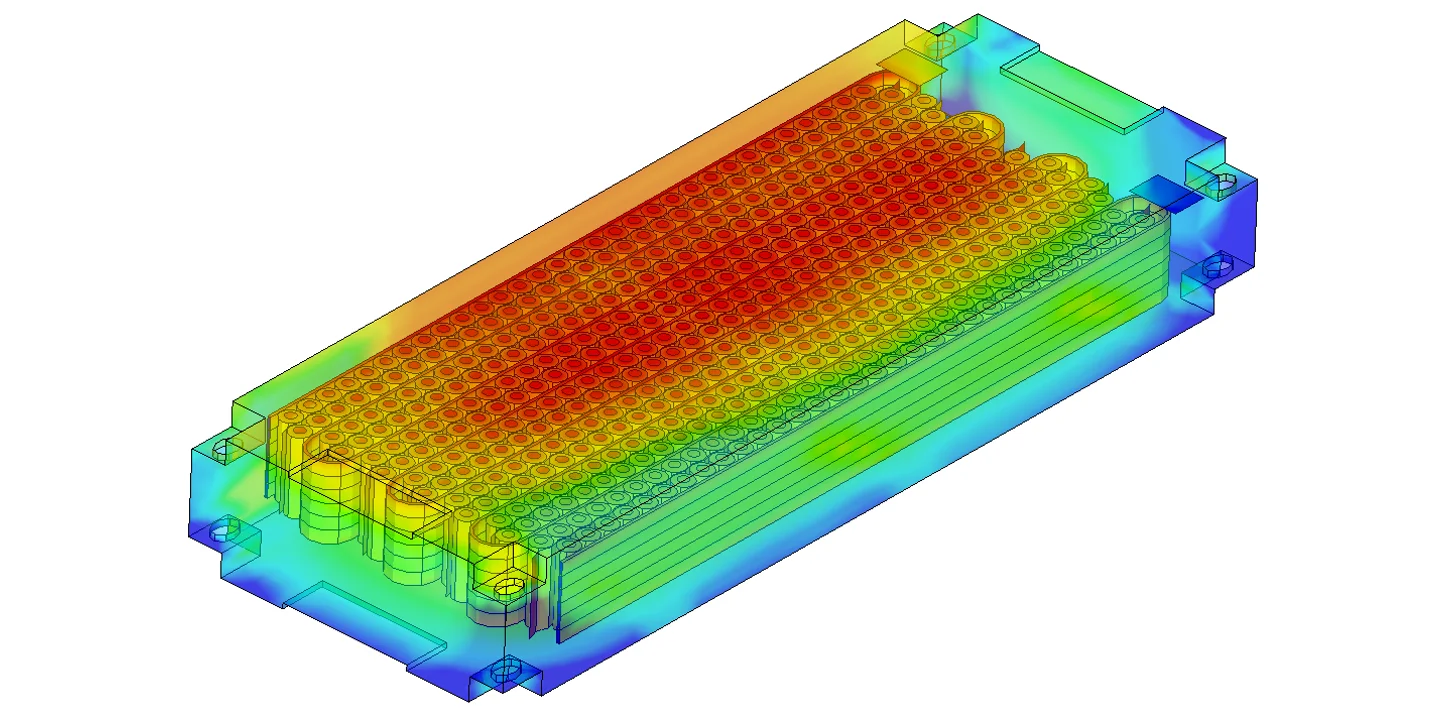
Dynamic Transient Solving
Unlike steady-state approximations, the Battery Thermal Extension is built on a transient solver designed to handle the rapid power fluctuations of real-world duty cycles. The physics engine tracks the battery’s temperature throughout an entire range of operational scenarios, accounting for how thermal mass and environmental boundary conditions affect performance over time.
Full Cycle Simulation
Models continuous heat accumulation across long-duration drive cycles or stationary discharge patterns.
Variable Boundary Conditions
Integrates real-world environmental data to test performance in extreme climates.
Rapid Solver Kernels
Delivers high-speed transient results that allow for multi-iteration design optimization.
Thermal-Electric Coupling
Continuously updates electrical performance parameters based on the current 3D temperature state.
Battery Lifetime & Degradation Analysis
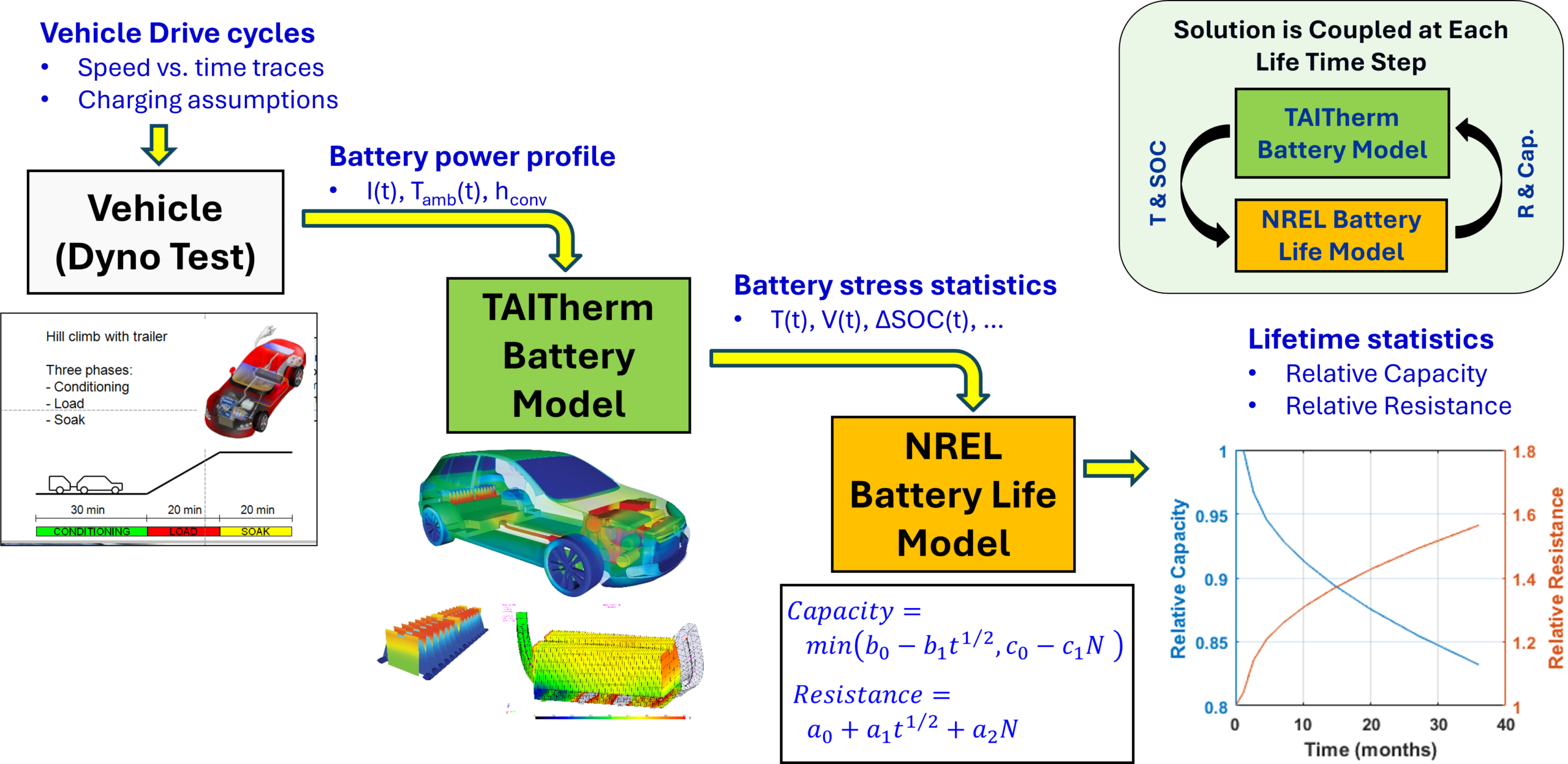
The extension includes a specialized Lifetime Model that evaluates the long-term performance and cost-effectiveness of battery pack designs. By integrating with CoTherm for process automation, the solver describes relative capacity and internal resistance as functions of both time and cycle count, allowing engineers to see the “long-term” thermal health of their design.
Capacity Fade Prediction
Quantifies the loss of energy storage capability over thousands of operational cycles.
Resistance Growth Modeling
Tracks the increase in internal resistance to predict future heat generation and efficiency losses.
Service Life Evaluation
Estimates the total operational lifespan of a pack based on specific thermal and duty cycle profiles.
ROI Optimization
Balances the cost of advanced cooling systems against the financial benefit of extended battery life.
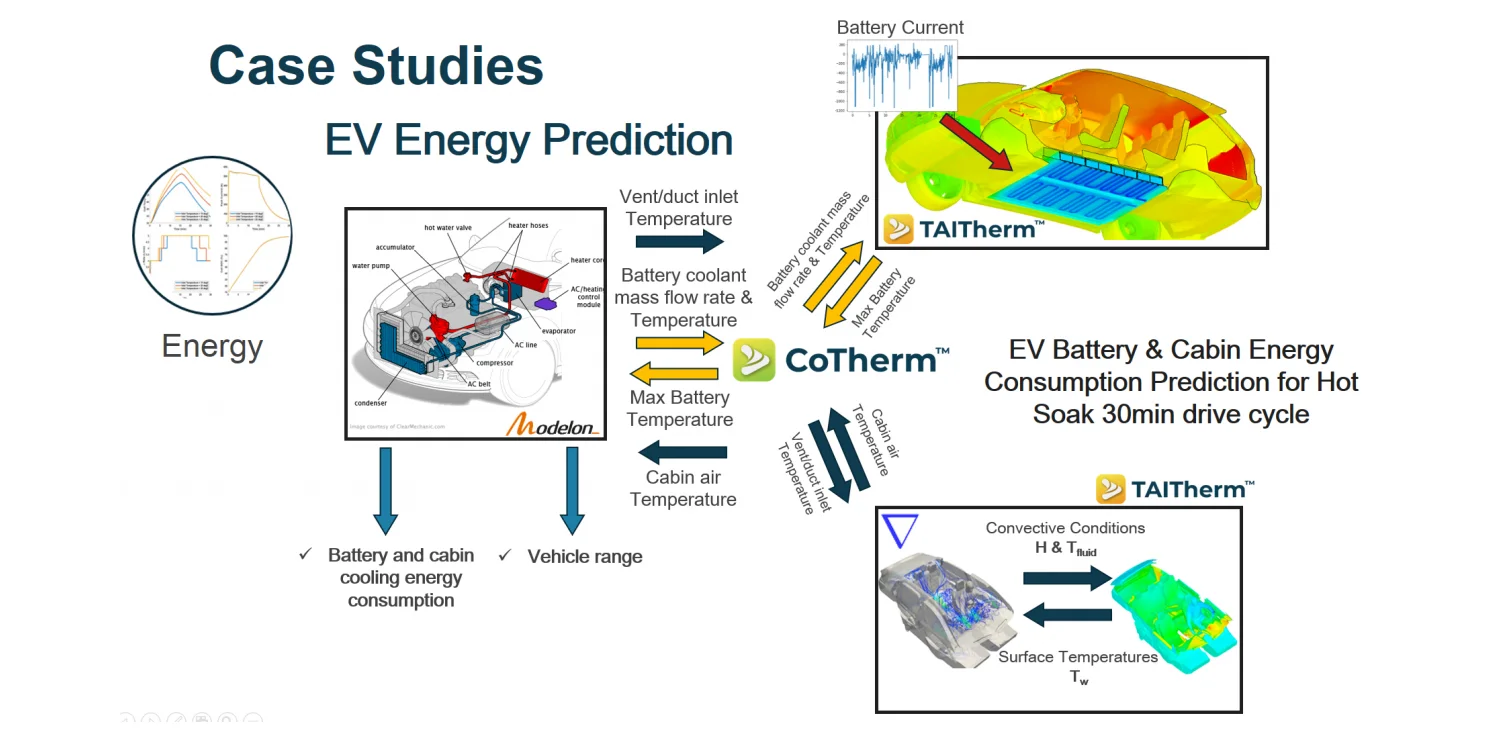
Advanced Process Automation & Coupling
To handle the complexity of modern vehicle architectures, the extension is designed for seamless integration within a larger CAE workflow. Through automated coupling, the battery’s thermal state can be linked to external cooling loops, cabin HVAC systems, or flight control logic, ensuring the pack is analyzed as part of a complete thermal-electrical ecosystem.
Coherent Workflow Integration
Automates complex simulation sequences and data exchange between different solvers.
System-Level Sensitivity
Identifies how changes in vehicle-level thermal management impact battery state-of-health.
Scalable Modeling
Supports everything from initial concept trade-offs to final production-level validation.
Electronics Thermal Analysis
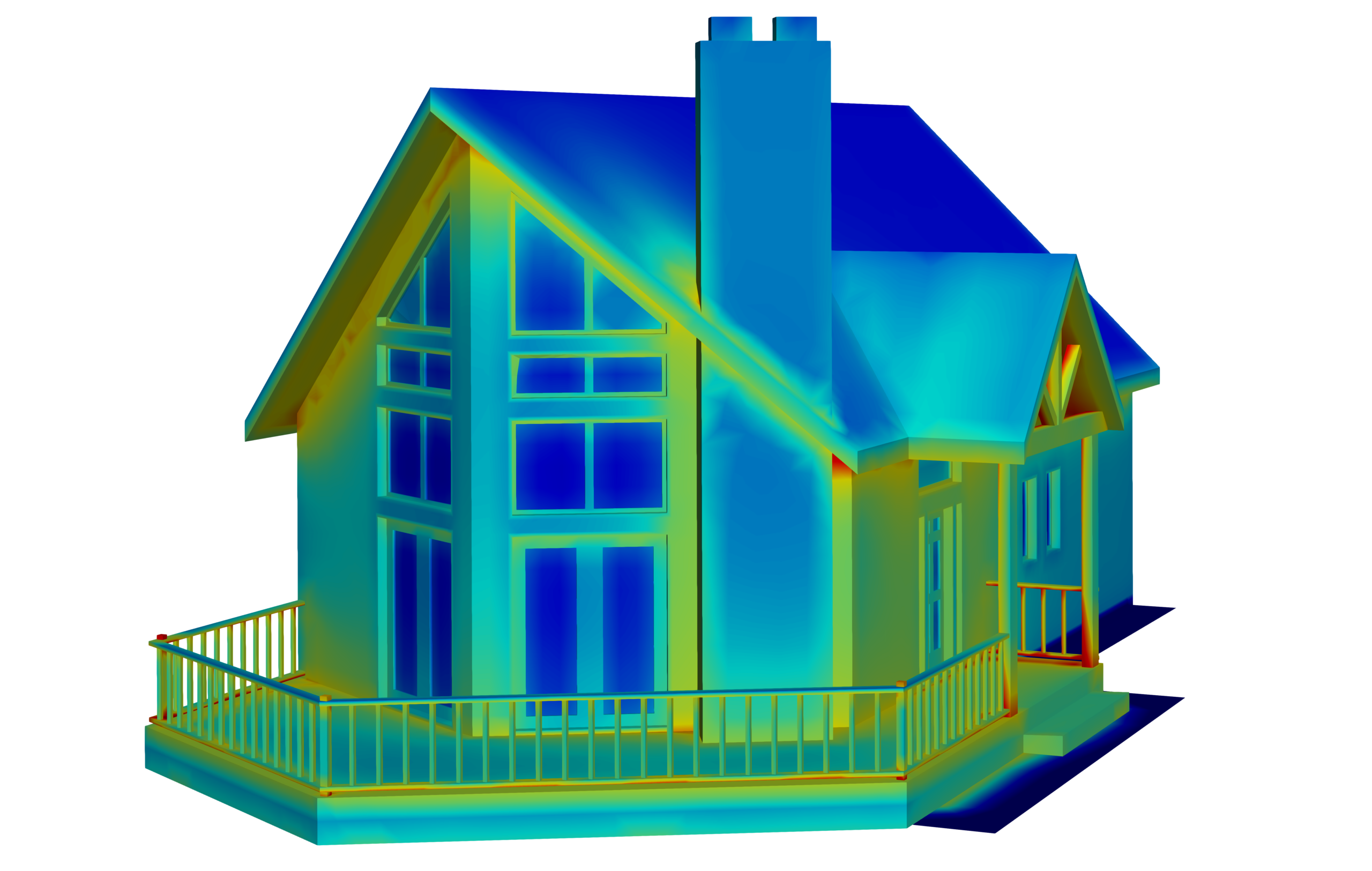
For high-performance computing, automotive auxiliary electronics, and telecommunications, CoTherm manages the coupling between thermal, fluid, and power-draw models.
Dynamic Workload Analysis
Coordinates realistic duty cycles, such as how a CPU/GPU “burst” of activity creates transient heat that the cooling system must mitigate.
Material Stack-Up Study
CoTherm’s automation of design sweeps pairs with TAITherm’s powerful multilayer modeling and thermal linking capabilities to easily study the thermal impact of different chip layout, cooling device, or TIM (Thermal Interface Material) choices across a design space.
Environmental Influence Considerations
Automated workflows enable comprehensive studies of how external ambient changes affect the internal operating temperature of electronics enclosures.
Engineered for
Real-World Applications
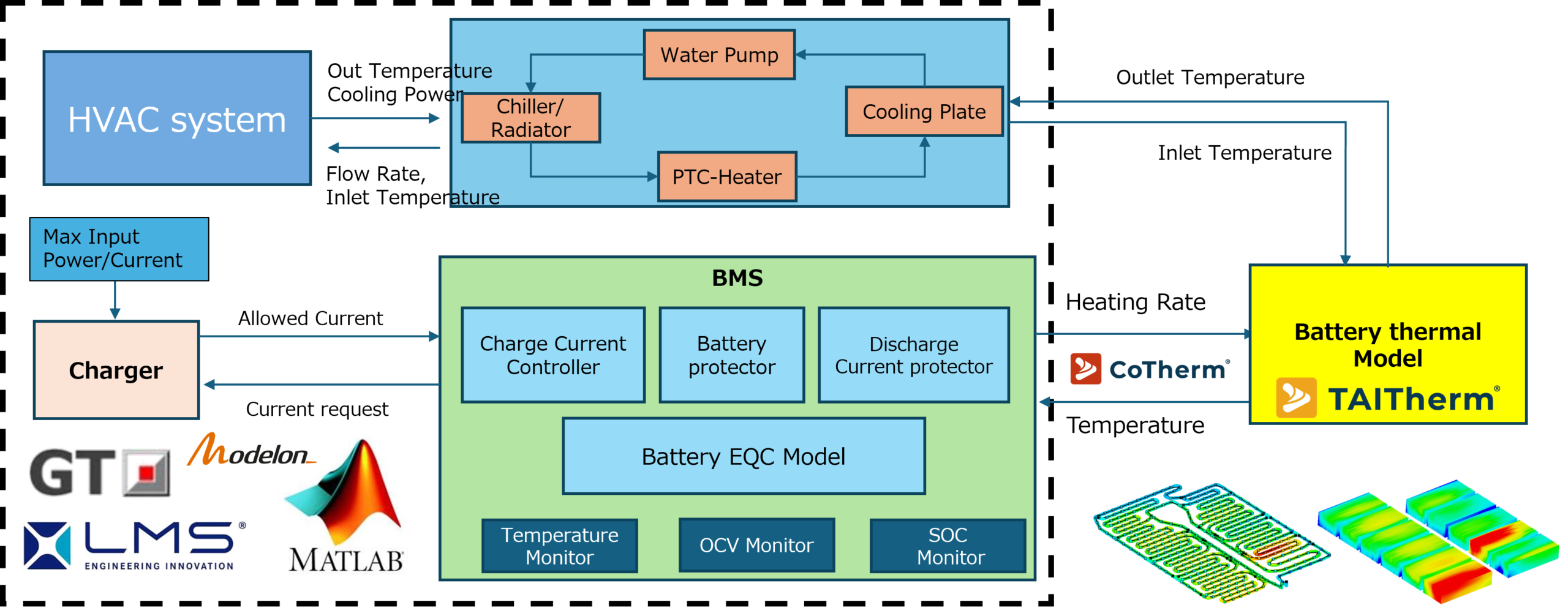
EV Fast-Charging Thermal Management
Rapidly charging a high-capacity pack generates massive internal heat due to high C-rates, often pushing the cooling system to its physical limits. The engineering challenge lies in balancing the desire for “gas-station speed” charging with the need to prevent localized hot spots that trigger power throttling or permanent cell damage. The Battery Thermal Extension simulates the entire charging profile, allowing engineers to predict the temperature rise of every cell and verify if the cooling plate and coolant flow rates can maintain the pack within the optimal operating window during peak current intake.
Throttling Prevention
Identifies the exact thermal thresholds where charging power would be limited, allowing for cooling system optimization.
Pre-conditioning Strategy
Tests the efficacy of heating or cooling the pack prior to arrival at a charging station to maximize energy acceptance.
Active vs. Passive Evaluation
Quantifies the change in performance between different cooling architectures under extreme 350kW+ charging loads.
Ambient Sensitivity
Analyzes how external temperature extremes (e.g., a hot parking lot) impact fast-charge durations and efficiency.
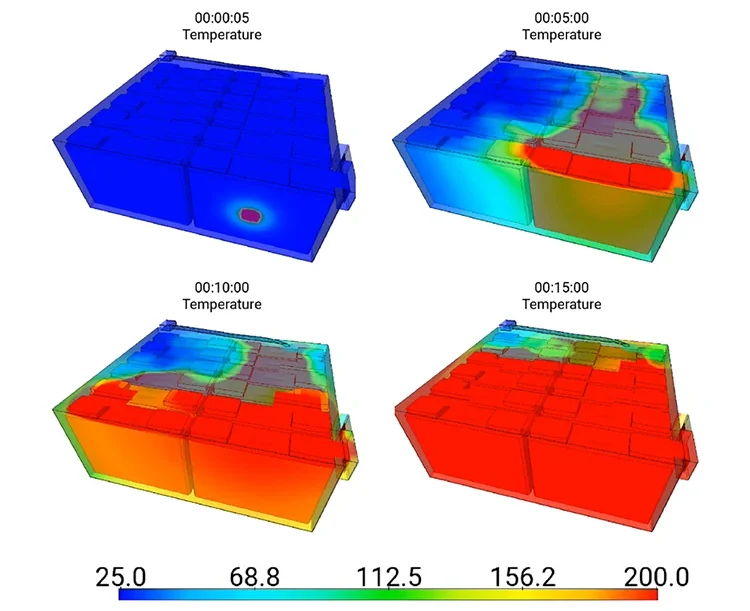
Thermal Runaway & Propagation Safety
Ensuring that a single-cell failure does not escalate into a catastrophic pack-level event is a critical safety and regulatory requirement. The primary challenge is modeling the rapid, non-linear heat release during a venting event and tracking how that energy moves to neighboring cells. The software enables engineers to simulate these “worst-case” scenarios in a virtual environment, tracking the heat propagation through the pack to validate that safety barriers—such as intumescent coatings or firewalls—can successfully arrest the propagation.
Heat Release Modeling
Simulates energy discharge based on experimental venting data to map the speed of thermal spread.
Barrier Validation
Evaluates the effectiveness of various thermal interface materials and insulation strategies in protecting adjacent modules.
Radiative Exchange
Captures the complex view factors and infrared energy transfer between cells during a localized fire event.
Venting Gas Logistics
Assists in the strategic placement of vents and degassing paths to safely redirect hot gases away from critical components.
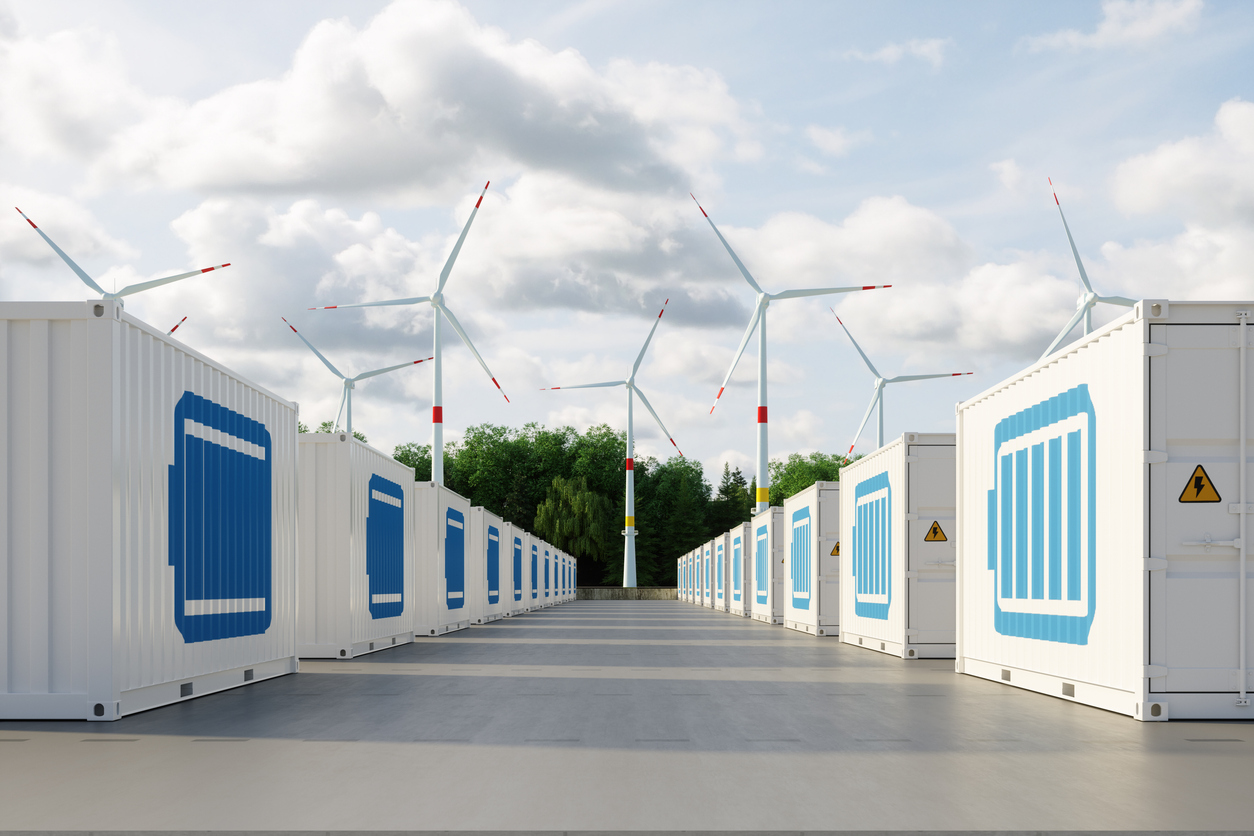
Stationary Energy Storage (BESS)
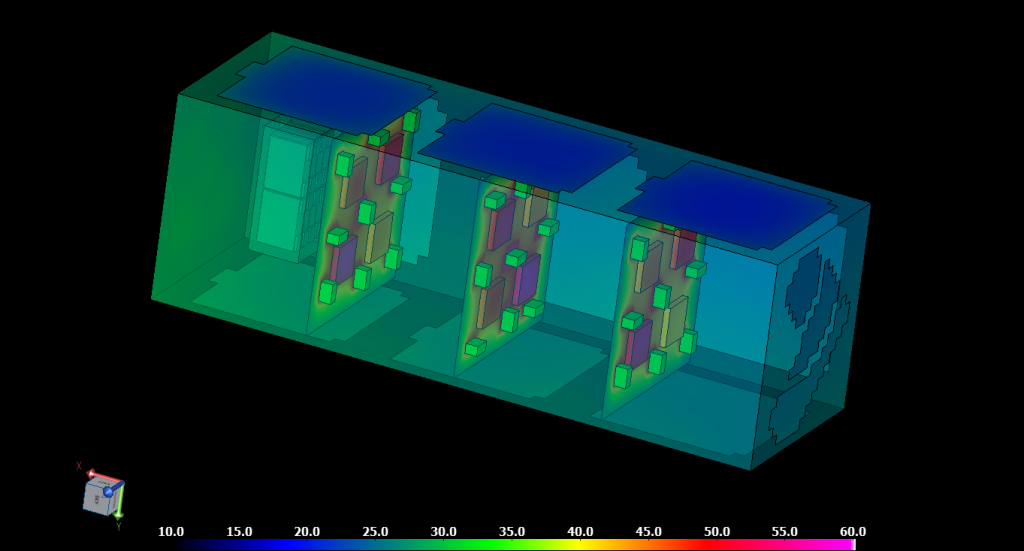
Grid-scale storage systems must operate reliably for decades, often in harsh, unshaded outdoor environments. The engineering challenge involves managing the thermal uniformity of thousands of cells housed in dense racks, where poor airflow or solar loading can lead to non-uniform aging and reduced system ROI. The Battery Thermal Extension models the interaction between the battery racks and the containerized environment, ensuring that forced-convection cooling is evenly distributed and that external environmental factors do not create “weak link” cells that compromise the entire array.
Long-Term Diurnal Analysis
Predicts the thermal stress on the system over 24-hour cycles, accounting for solar radiation on the container exterior.
Airflow Optimization
Identifies stagnant air zones within the rack architecture that could lead to localized overheating.
Cycle Life Projection
Uses the Lifetime Model to estimate capacity fade and resistance growth over a 15- to 20-year operational window.
HVAC Load Sizing
Calculates the total heat rejection requirements for the container’s climate control system to minimize parasitic energy loss.

High-Rate Transient Drive Cycles
High-performance EVs and hybrid aerospace applications subject batteries to extreme, intermittent current spikes during aggressive acceleration and regenerative braking. The challenge for engineers is capturing the rapid thermal “shocks” that occur at the cell tabs and interconnects, which may not be visible in steady-state or average analyses. The software’s transient solver tracks these high-frequency power fluctuations, providing a high-fidelity view of internal temperature spikes and helping engineers design busbars and cooling systems that can handle the “burst” nature of performance driving.
Peak Temperature Tracking
Captures the localized heating at cell tabs and busbars during maximum discharge pulses.
Regenerative Braking Analysis
Models the thermal impact of high-current energy recovery events on the battery’s state-of-health.
Duty Cycle Validation
Tests the pack against specific track profiles (e.g., Nürburgring) or flight profiles to ensure thermal stability.
Power Derating Analysis
Determines the “thermal headroom” available for performance maneuvers before the Battery Management System (BMS) must intervene.
Rigorously Validated for
Real-World Accuracy
The Battery Thermal Extension provides specialized capabilities required for high-stakes electrification projects, delivering the insights needed to reduce physical prototyping costs and improve system reliability. By bridging the gap between cell-level and system-level thermal management, it provides a high-fidelity virtual environment for identifying risks and optimizing performance.

Coupled Accuracy
Leverage NREL-developed models to capture the true electrical and thermal behavior of cells.

Predictive Longevity
Use the Lifetime Model to design packs that maintain capacity and minimize resistance growth over time.

Transient Efficiency
Achieve detailed 3D results across long-duration cycles significantly faster than traditional CFD.

Total System Integration
Account for the complex interplay between battery chemistry, pack hardware, and external environmental conditions.
Tools for Thermal Modeling
ThermoAnalytics product extensions are designed to integrate seamlessly with core solvers to provide high-fidelity, specialized analysis without leaving the primary simulation environment.
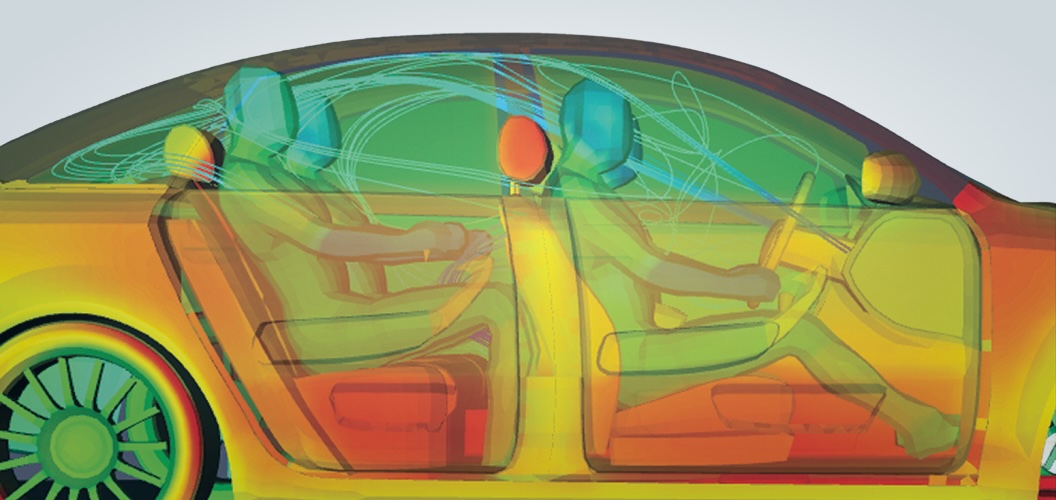

Simulate real-world thermal behavior across complete systems with validated, multiphysics accuracy.
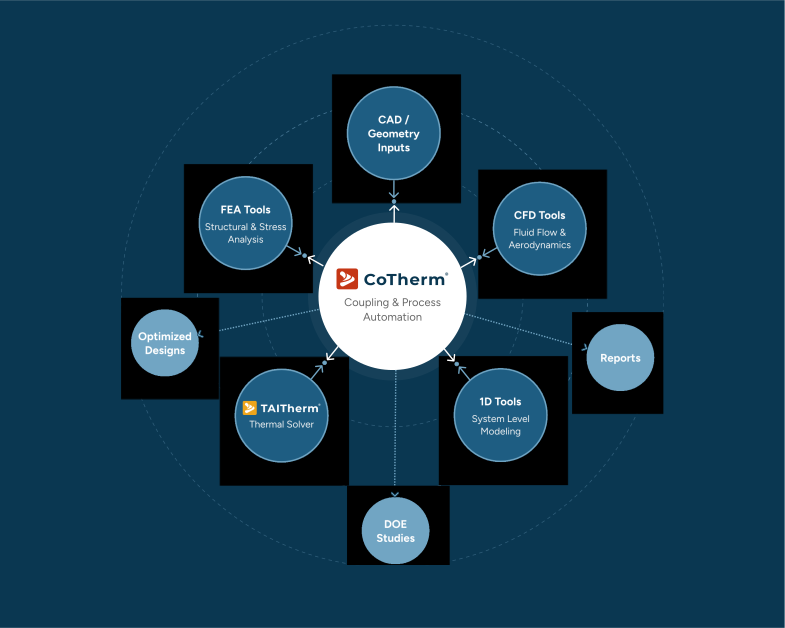

Automate, orchestrate, and streamline multiphysics simulation workflows across tools and teams.


Predict EO/IR signatures in real environments for mission-critical visibility and survivability analysis operations.