
EO/IR Sensor Simulation
Defense Ground Vehicle Thermal Analysis
Superior Thermal Survivability for Next-Gen Ground Vehicles
In the modern battlespace, a vehicle’s thermal signature is just as critical as its armor. ThermoAnalytics provides industry-leading CAE software and consultancy services designed to predict, manage, and optimize the thermal performance of defense ground vehicles. From reducing infrared (IR) signatures to ensuring component reliability in extreme desert environments, our solutions empower engineers to design for survivability and mission success.
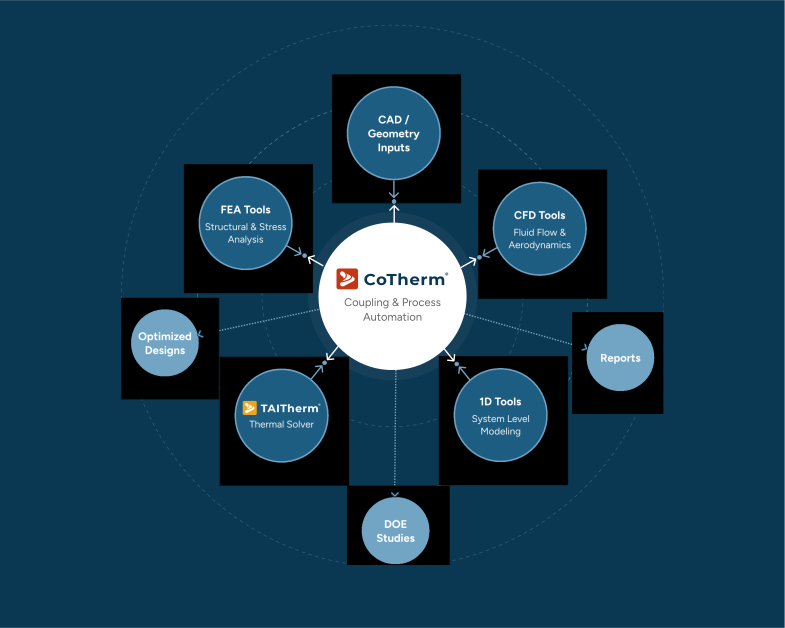
Our technology bridges the gap between complex fluid dynamics and real-world transient environments, allowing for high-fidelity simulations of Internal Combustion Engines (ICE), Hybrid-Electric Drives, and unmanned platforms.
How It Works
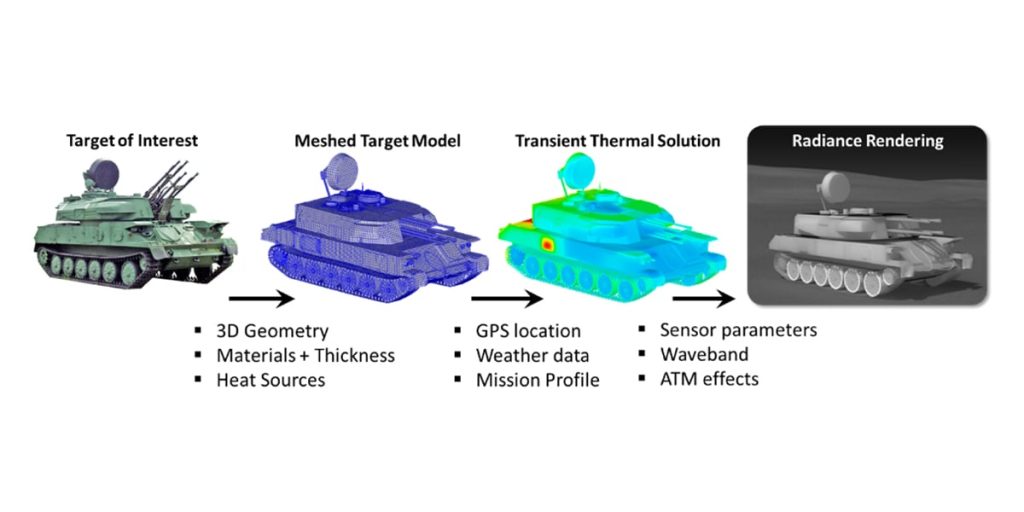
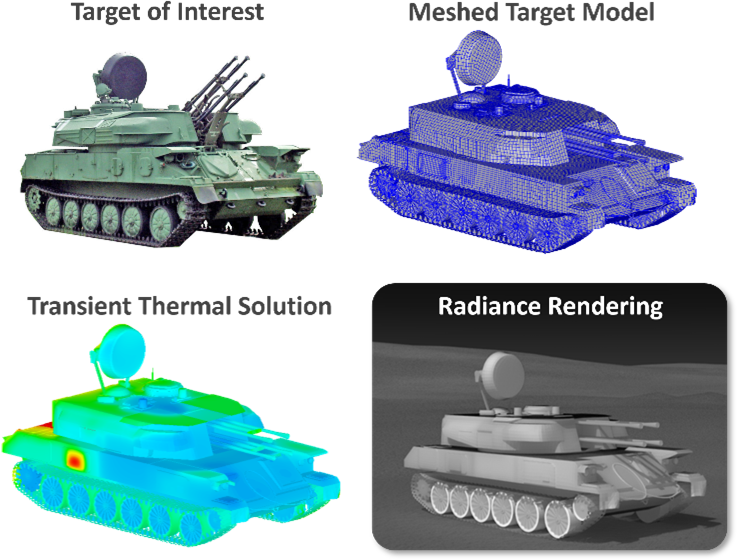
The technical foundation of our ground vehicle analysis is MuSES, the industry standard for thermal signature modeling. MuSES goes beyond basic heat transfer by utilizing a complete environmental model that accounts for terrain, atmosphere, and celestial conditions.
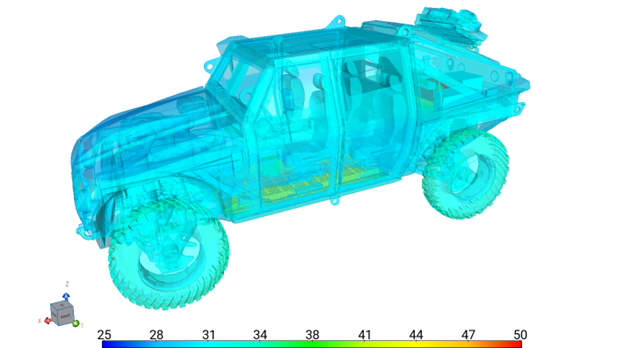
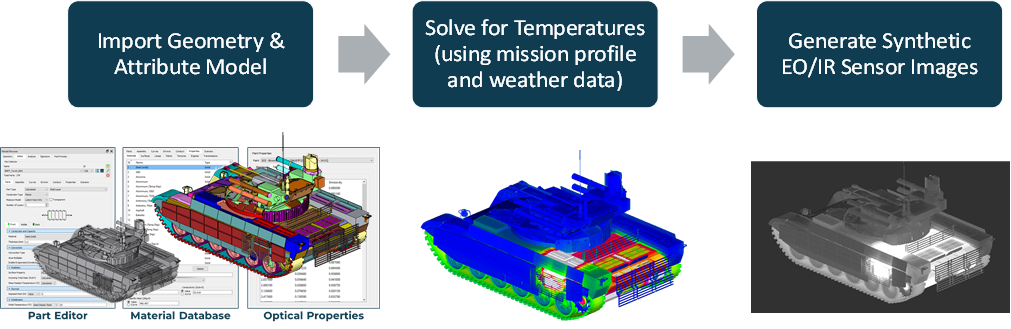
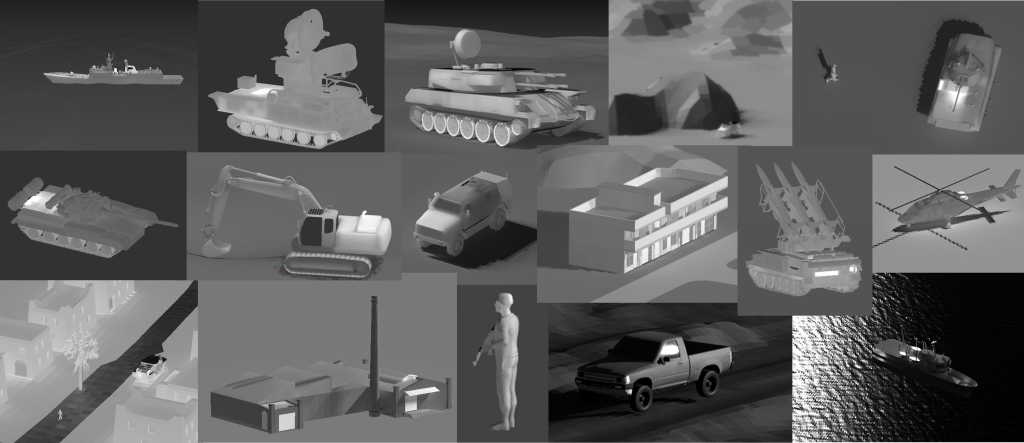
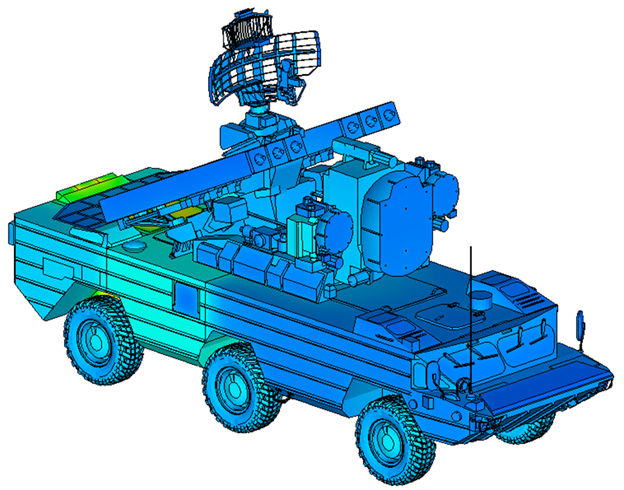
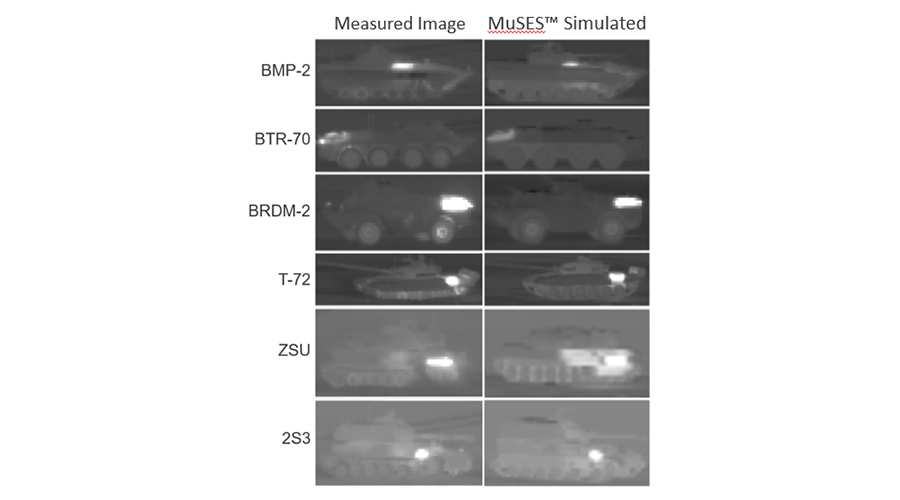
The software calculates a vehicle’s thermal state by solving the transient heat balance equation, integrating internal heat sources, such as the engine, drivetrain, and electronics, with external factors like solar loading and sky radiation. MuSES utilizes a view-factor based radiation solver to accurately track how energy is emitted and reflected between complex vehicle geometries and the surrounding environment. By simulating the “apparent temperature” across different sensor wavebands, MuSES enables engineers to predict how a vehicle will appear to an infrared sensor under any geographic or seasonal condition, providing a true-to-life digital twin for survivability testing.
Engineering Without Compromise
By integrating ThermoAnalytics into your design workflow, you transform thermal management from a reactive fix into a competitive advantage.
Infrared Signature Management
Detectability is the primary threat to ground assets. We provide comprehensive analysis of a vehicle’s IR signature across various wavebands. By simulating the thermal contrast between the vehicle and its background, engineers can optimize heat shields, insulation, and active cooling systems to “blend” the vehicle into the environment, significantly reducing the lock-on range of thermal-guided threats.
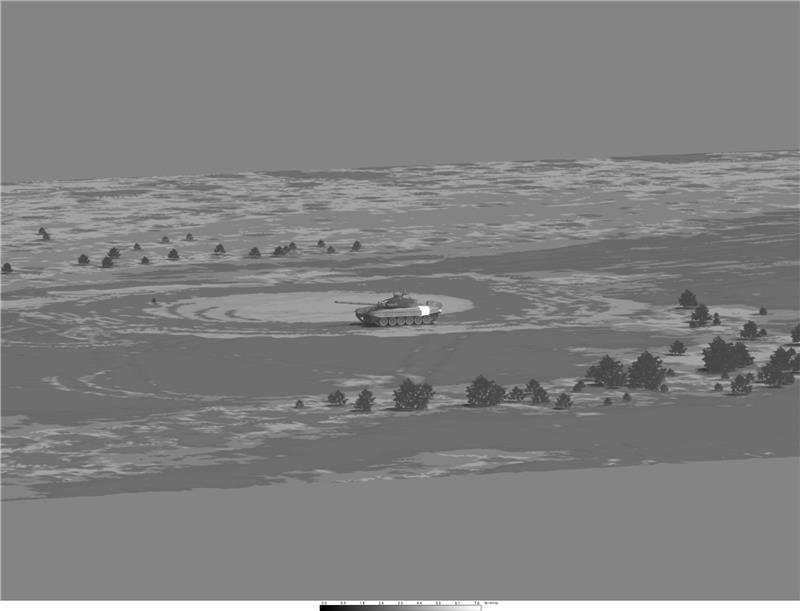
Model-Informed Field Testing for Enhanced Data Collection
Enhance the effectiveness of field testing using advanced target models that enable comprehensive planning, execution, and post-test analysis within a unified simulation environment. These models provide high-fidelity representations of thermal phenomenology, allowing users to anticipate observable signatures and optimize sensor collection strategies prior to deployment. By simulating a range of environmental and operational scenarios, users can assess expected outcomes with greater confidence and refine test parameters in advance. This capability supports more informed tactical decision-making, improves operational efficiency, and maximizes the value of collected data. Leveraging detailed target models ultimately enables the optimization of field test design while improving insight into complex system-level behaviors observed during test events.
Battery and Hybrid Power Systems
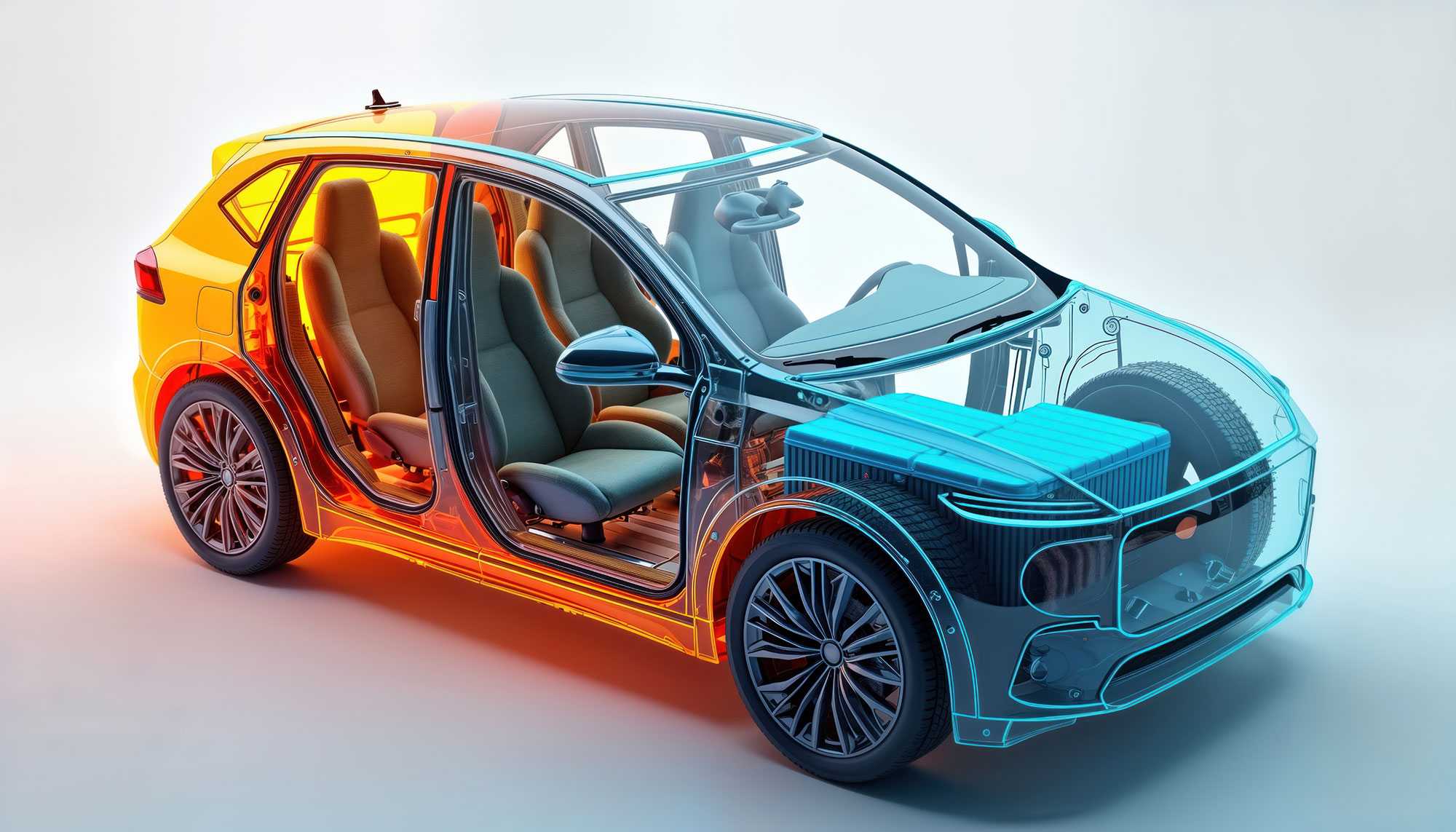
As the military transitions toward hybrid and fully electric platforms, managing battery thermal runaway and lifespan is paramount. Our analysis tools simulate battery pack cooling under high stress “silent watch” or “silent mobility” maneuvers. We help designers balance the trade-offs between battery weight, cooling power requirements, and cell longevity in unpredictable climates.