
Fluid Dynamics & Airflow
CFD Coupling Solutions
Revolutionizing Thermal Accuracy with CFD Coupling
In the complex world of thermal management, precision is everything. While Computational Fluid Dynamics (CFD) excels at simulating fluid flow, and specialized thermal tools master conduction and radiation, the most accurate results live at their intersection.
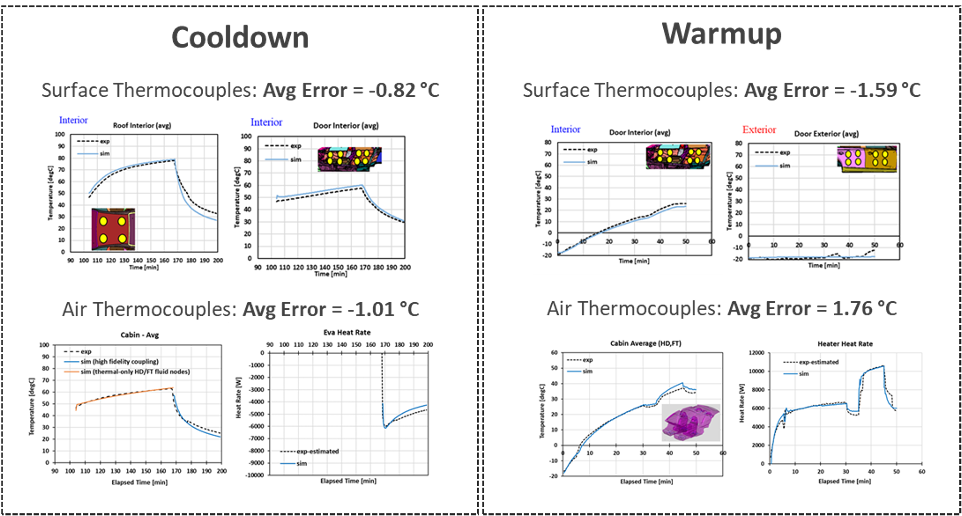
By synchronizing our industry-leading thermal solver, TAITherm, with premier CFD packages, we provide a high-fidelity simulation environment. This synergy allows engineers to capture the transient interactions between fluid convection and solid-body heat transfer, ensuring that neither the fluid physics nor the thermal response is compromised.
How It Works
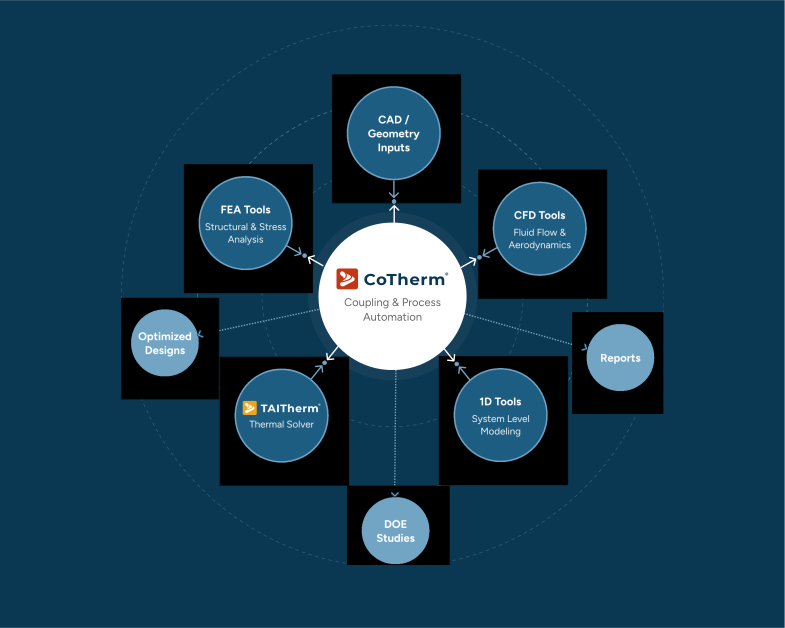
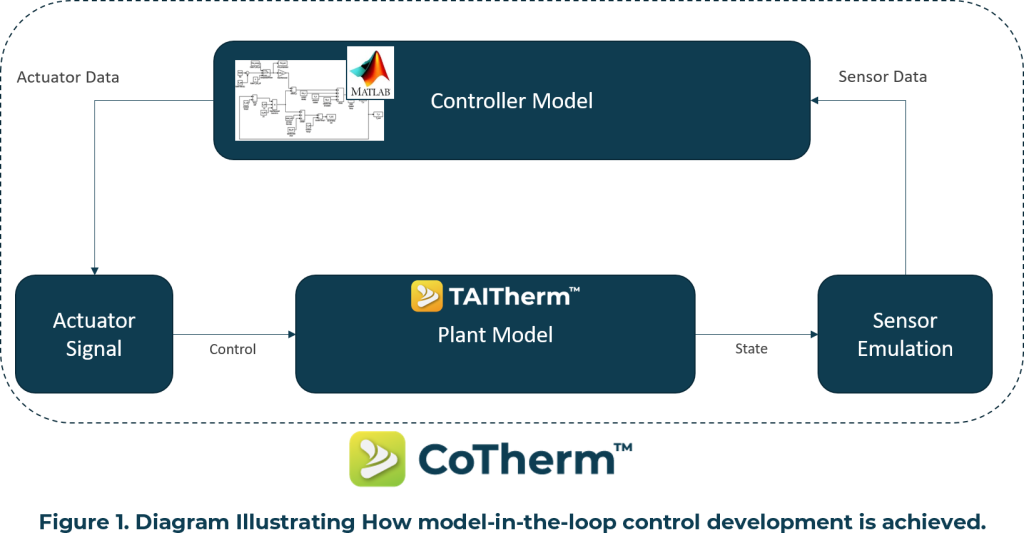
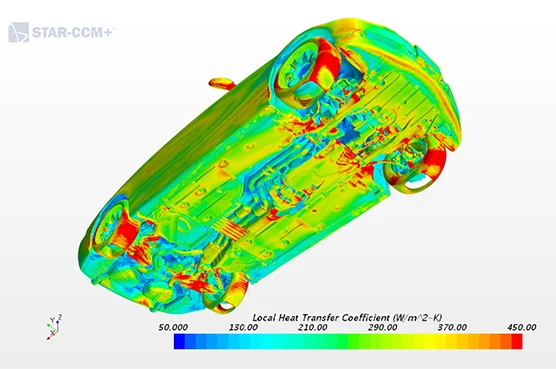
The core of the CFD Coupling process is a dynamic, bi-directional data exchange that synchronizes the fluid and solid domains. Instead of using “guessed” or static boundary conditions, the CFD solver calculates the local fluid velocities and temperatures, which are then mapped as convective heat transfer coefficients and fluid temperatures onto the TAITherm surface mesh. TAITherm then solves for the high-fidelity 3D conduction and multi-bounce radiation within the solid parts. These updated surface temperatures are fed back to the CFD solver to update the fluid boundary layer, creating a continuous loop. This ensures that the thermal response of the solids and the complex physics of the fluid flow reach a physically accurate equilibrium, particularly during transient events where temperatures change rapidly over time.
Engineering Without Compromise
By integrating ThermoAnalytics into your design workflow, you transform thermal management from a reactive fix into a competitive advantage.
Underhood & Powertrain Thermal Management
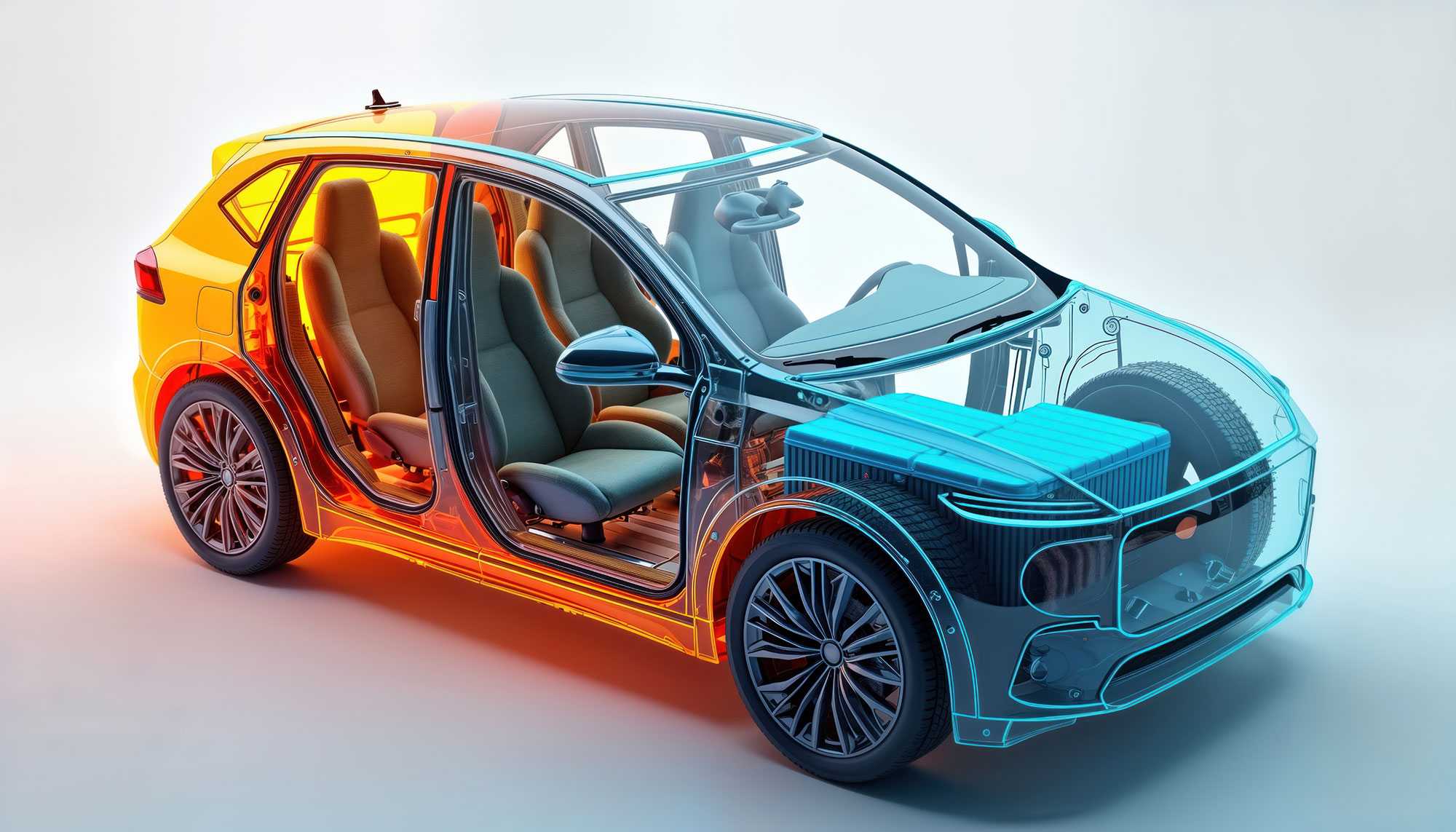
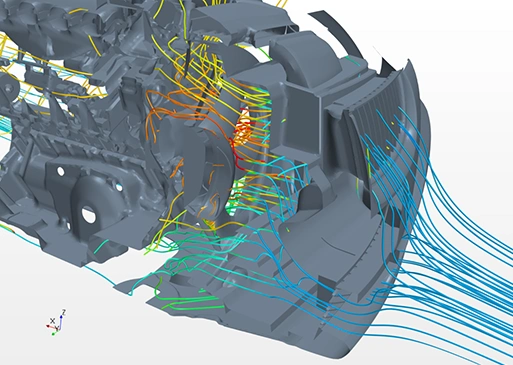
Managing the extreme heat of an internal combustion engine or high-output electric motor requires more than just airflow analysis. CFD Coupling allows for the simulation of key-off soak scenarios, where airflow ceases but component temperatures continue to rise due to latent heat. This analysis is critical for preventing plastic component degradation and ensuring the longevity of sensitive electronics near heat sources.
Cabin Comfort and HVAC Optimization
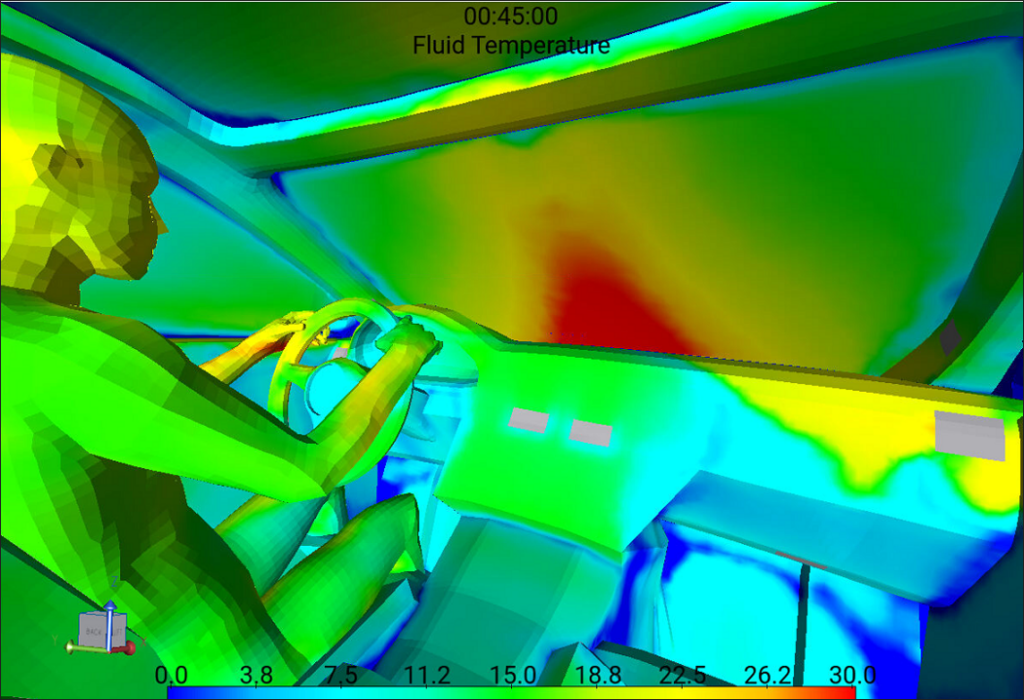
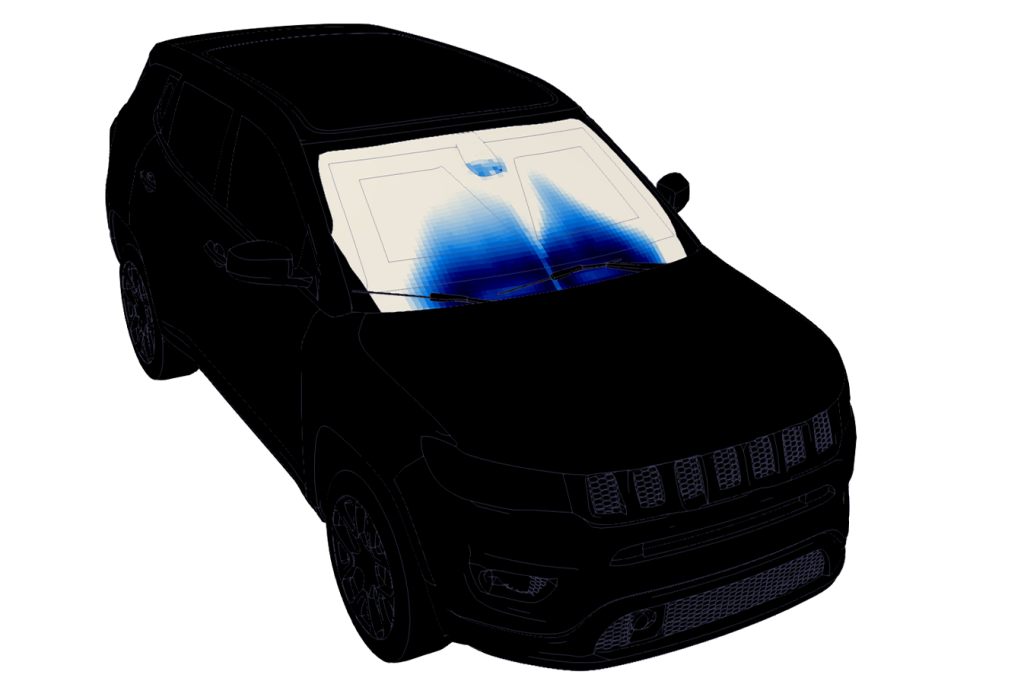
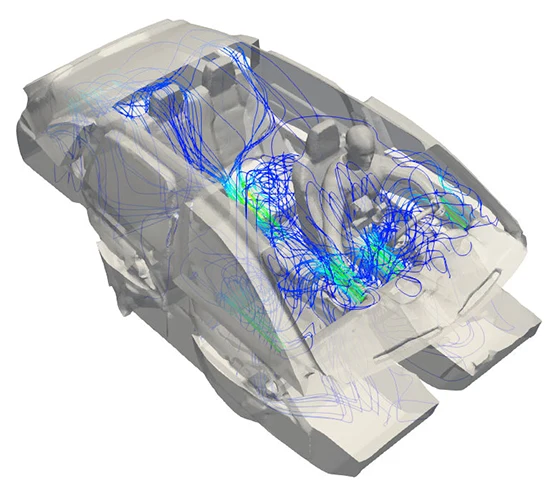
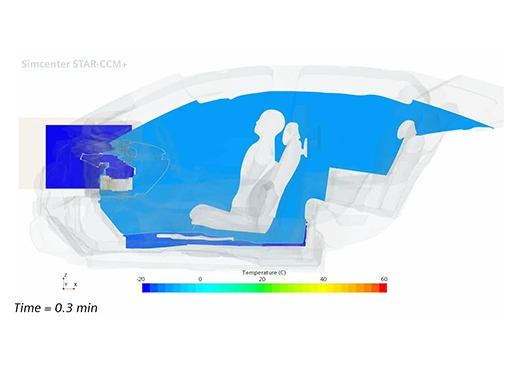
Predicting human thermal comfort involves a delicate balance of solar loading, vent placement, and metabolic heat. By coupling TAITherm’s Human Thermal Extension with CFD airflow, engineers can visualize how localized air velocity impacts skin temperatures and perceived comfort. This enables the design of HVAC systems that are energy-efficient while maintaining a premium passenger experience.
Battery Thermal Management Systems
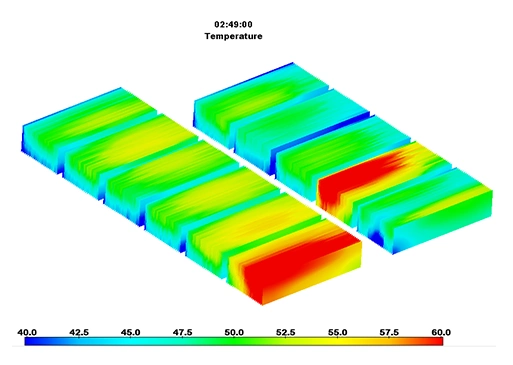
For electric vehicles, temperature uniformity is the “holy grail” of battery life. Coupling allows designers to simulate liquid cooling plates and convective air cooling with extreme detail. It helps in identifying hotspots within cells that a standalone CFD model might miss, allowing for the optimization of coolant flow rates and phase-change material effectiveness under rapid discharge cycles.