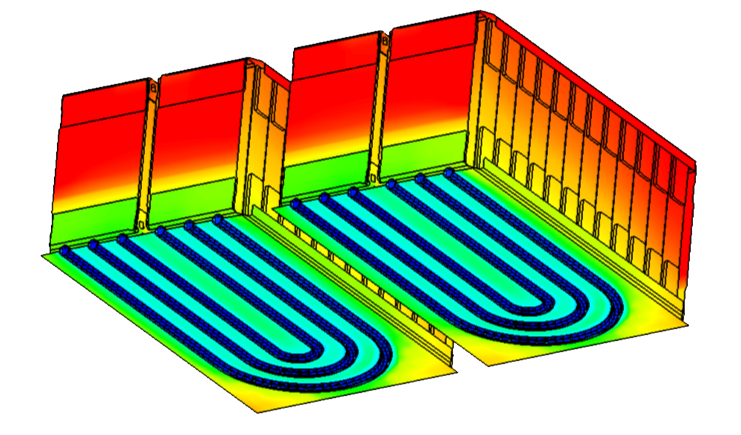

Thermal Management & Heat Transfer
Mastering Battery Safety: High-Fidelity Thermal Runaway & Propagation Simulation
Identify Thermal Runaway Risks Before They Escalate
In the rapidly evolving landscape of vehicle electrification, the stakes for battery safety have never been higher. Thermal Runaway, a self-sustaining, uncontrolled increase in temperature, represents the most critical failure mode for high-energy-density battery packs. Managing this risk requires more than just cooling; it demands a deep understanding of how local cell failures propagate into system-wide events.
ThermoAnalytics provides high-fidelity simulation solutions that allow engineers to predict, analyze, and mitigate thermal runaway risks long before physical prototypes are built. By accurately modeling the complex interplay of chemical kinetics and heat transfer, we empower manufacturers to deliver safer, more resilient energy storage systems.
How It Works
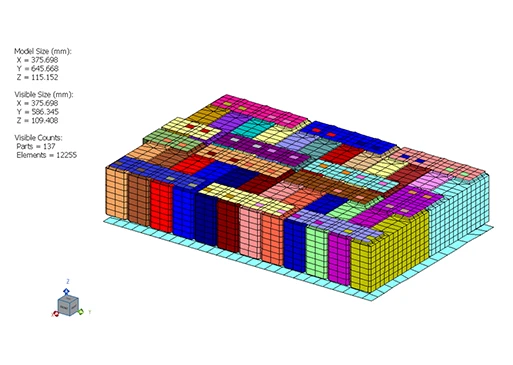
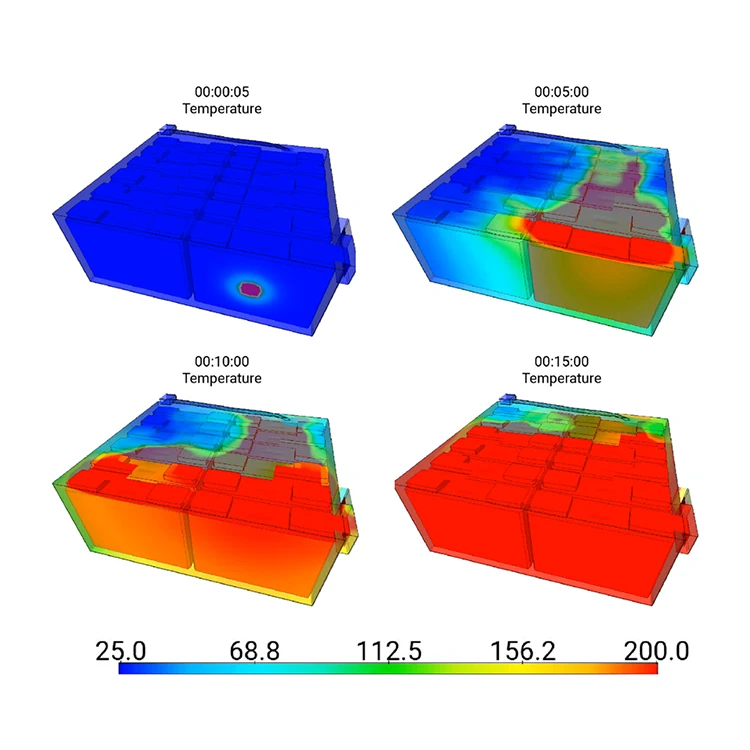
Predicting thermal runaway requires a sophisticated approach to transient heat transfer. Unlike steady-state cooling analysis, runaway simulation must account for rapid, non-linear energy releases and the subsequent radiation exchange and conduction between adjacent cells and pack housing.
Our methodology leverages a seamless thermal-electrical integration:

TAITherm & Battery Thermal Extension
These core tools manage the complex conduction and radiation within the pack. The Battery Thermal Extension specifically handles the electrochemical heat generation, allowing for the simulation of internal shorts and the resulting exothermic reactions.

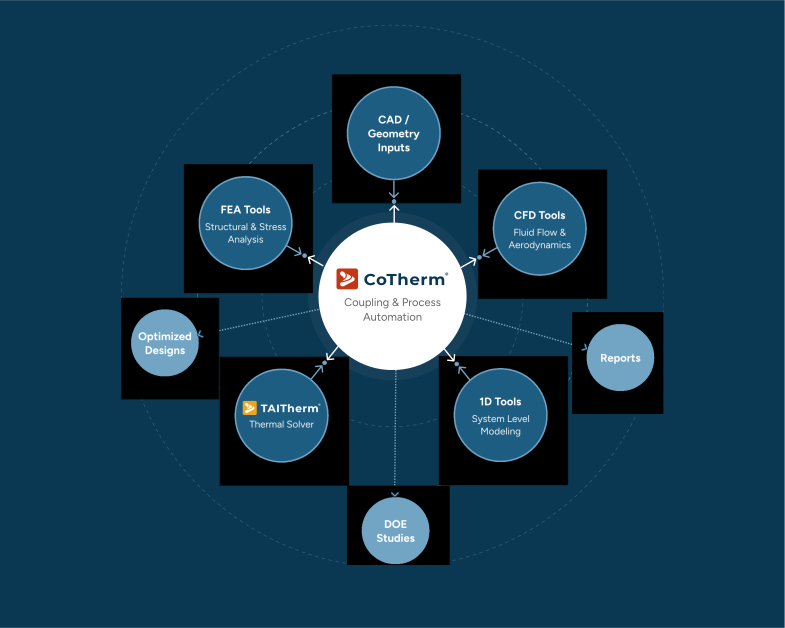
CoTherm
This process automation engine serves as the connective tissue, coupling TAITherm with CFD (Computational Fluid Dynamics) for high-fidelity fluid coupling. This ensures that the impact of venting gases and coolant phase changes is accurately captured.

MuSES
For applications requiring signature management or integration into broader environments, MuSES provides the necessary multi-spectral modeling capabilities.
Engineering Without Compromise
By integrating ThermoAnalytics into your design workflow, you transform thermal management from a reactive fix into a competitive advantage.
Cell-to-Cell Propagation & Mitigation Strategies
The primary engineering challenge in pack design is preventing a single-cell failure from cascading. Simulation allows for the testing of various inter-cell materials (such as aerogels or phase-change materials) to determine their effectiveness in quenching heat transfer. By modeling the precise timing of the exothermic trigger, TAITherm helps engineers determine the critical spacing and insulation thickness required to arrest the propagation, directly improving passenger safety.
Venting Gas Dynamics & Internal Pressure Management
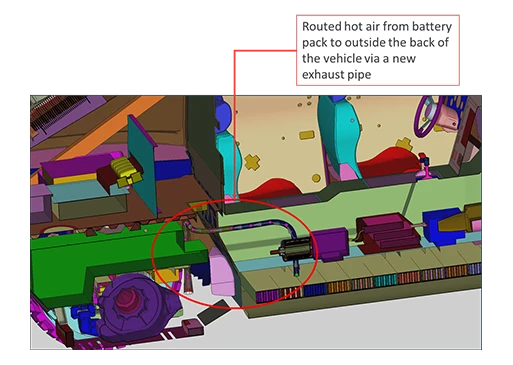
When a cell enters thermal runaway, it releases high-temperature gases that can compromise the structural integrity of the battery enclosure. Using CoTherm to couple thermal solvers with CFD, we simulate the flow paths of these venting gases. This analysis identifies “hot spots” on the pack lid or neighboring electronics, enabling the strategic placement of burst discs and vent ports to direct hazardous energy away from the cabin.

Fast-Charging Thermal Stress & Aging
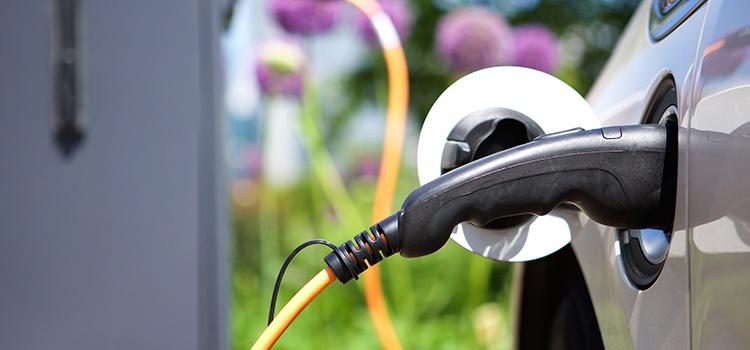
Thermal runaway isn’t always the result of a crash; it can be the cumulative result of thermal-electrical stress during repeated fast-charging cycles. Our simulation environment analyzes the non-uniform temperature distributions that occur during 350kW+ charging sessions. By predicting how localized heating accelerates SEI (Solid Electrolyte Interphase) layer breakdown, we provide the data necessary to refine Battery Management System (BMS) logic, balancing high performance with long-term safety.